











 CLOUD
CLOUD
CLOUD
CLOUD

CLOUD

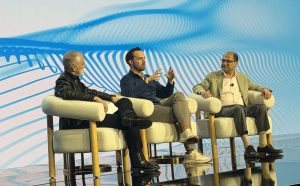
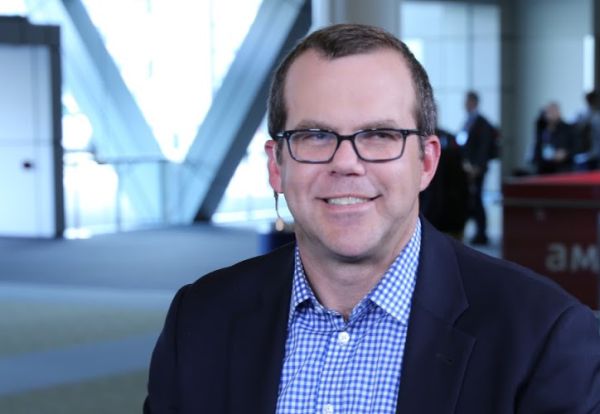
The digital transformation of business is a work in progress, leaving many enterprises straddling the hybrid information technology fence. Most companies run a host of legacy systems that aren’t going anywhere. At the same time, those businesses are looking to build new systems in the cloud. Getting in-house infrastructure to talk to the cloud is a challenge. Managing both even more so. Solutions are needed, according to Jay Jamison (pictured), vice president of strategy, Software Defined and Cloud Division, at Hewlett Packard Enterprise Development LP.
Jamison is working to bring those solutions to life. “Customers have been very clear at the excitement and opportunity they see ahead of them in terms of digital transformation,” he said. At the same time, these customers have thousands of legacy applications to support. What they need is a way to manage their whole estate, in the cloud and at home.
During the Red Hat Summit in Boston, Massachusetts, Jamison spoke to Stu Miniman (@stu) and Rebecca Knight (@knightrm), co-hosts of theCUBE, SiliconANGLE’s mobile live-streaming studio, about HPE’s plans for combining legacy and the cloud, as well as HPE’s cloud focus and the future of the cloud industry in general. (* Disclosure below.)
The challenge of managing a hybrid estate is the major problem of hybrid IT today, Jamison felt. This presents an opportunity for HPE and partners like Red Hat Inc. to come forward and make working with these estates easier.
What HPE and Red Hat are doing together is taking the best of both legacy and the cloud. Using Ansible, Red Hat’s automation technology, and APIs from HPE, companies can control and modify infrastructure hardware without presenting a new experience to their users, Jamison explained.
As to the cloud, Jamison saw a set of problems big and broad enough to create many companies. There’s a notion of managing hybrid estates through one pane, a common interface for everything. There’s an interesting market for companies who can make that happen. “Particularly in the enterprise space, it’s a really exciting time,” Jamison said.
Watch the complete video interview below, and be sure to check out more of SiliconANGLE’s and theCUBE’s independent editorial coverage of Red Hat Summit 2017. (* Disclosure: Red Hat Inc. sponsors some Red Hat Summit segments on SiliconANGLE Media’s theCUBE. Neither Red Hat nor other sponsors have editorial control over content on theCUBE or SiliconANGLE.)
Support our mission to keep content open and free by engaging with theCUBE community. Join theCUBE’s Alumni Trust Network, where technology leaders connect, share intelligence and create opportunities.
Founded by tech visionaries John Furrier and Dave Vellante, SiliconANGLE Media has built a dynamic ecosystem of industry-leading digital media brands that reach 15+ million elite tech professionals. Our new proprietary theCUBE AI Video Cloud is breaking ground in audience interaction, leveraging theCUBEai.com neural network to help technology companies make data-driven decisions and stay at the forefront of industry conversations.