










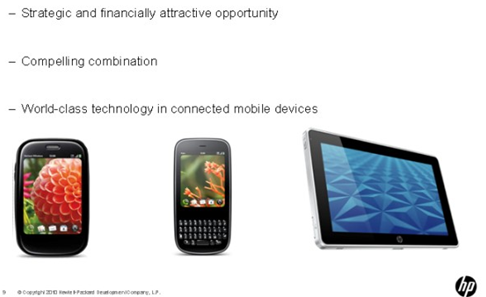
 Enough has been written about HP acquiring Palm that I don’t think it’s that newsworthy today… however something has been bouncing around my hamster cage since reading the coverage yesterday that I’m not ready to let it go.
Maybe this isn’t about smart phones at all? Put another way, of course this is about smart phones but maybe the value of Palm to HP goes way beyond smart phones. Arguably the two assets that Palm has which are worth something are the credibility of the Palm brand and the critically acclaimed (by geeks that is) WebOS. As Apple and Google have proved with the iPhone OS and Android respectively, there is nothing about these platform operating systems that requires a voice communication capability be attached to them… in other words a smart phone doesn’t have to be a phone.
HP already has a tablet and netbook business, one that depends on Microsoft, and I can imagine the frustration that HP executives must feel to have invested so much into that line of business yet have it muddle around in the back of the pack with regard to mindshare. Similarly with smart phone handsets, HP has respectable entries and while it’s long odds that HP would walk away from Windows Mobile, especially on the verge of Windows 7 Mobile, I can believe that HP wants more control over their OS platform for these devices.
Furthermore, the market has declared that they are welcoming of competition at the platform OS level, using Windows Mobile is no longer a safe choice for handset makers and arguably it is a liability as consumers, business and mass market alike, view this as the regressive choice.
There are risks, of course, and if building out the required app marketplace around WebOS were easy then Palm would have done it, but the core risk is that the market consolidates around Android and iPhone OS for tablets and other types of mobile web devices and being 3rd or 4th in that market means you aren’t in that market. In such a scenario HP is in big trouble because they own the mobile OS, which means hitching their wagon to Android becomes problematic (HP already has an Android netbook but is a minor entry in their offering so I expect it will go away now).
All things considered, the risks are significant but the market is still in the formative stages and I doubt it will be winner take all like desktop computing was. The value of the acquisition is roughly 1% of HP’s market capitalization so from a financial standpoint they are not exposed like they were with Compaq,in other words investors will give them a lot of latitude as they make this work and investors will clearly appreciate that HP has elevated themselves into a new peer group with Google and Apple for the mobile marketplace.
On balance, I like this deal a lot in spite of significant forward risk for making it all work.
[Editor’s Note: Jeff cross-posted this on his personal blog. –mrh]
Support our mission to keep content open and free by engaging with theCUBE community. Join theCUBE’s Alumni Trust Network, where technology leaders connect, share intelligence and create opportunities.
Founded by tech visionaries John Furrier and Dave Vellante, SiliconANGLE Media has built a dynamic ecosystem of industry-leading digital media brands that reach 15+ million elite tech professionals. Our new proprietary theCUBE AI Video Cloud is breaking ground in audience interaction, leveraging theCUBEai.com neural network to help technology companies make data-driven decisions and stay at the forefront of industry conversations.