 INFRA
INFRA
INFRA
INFRA





INFRA

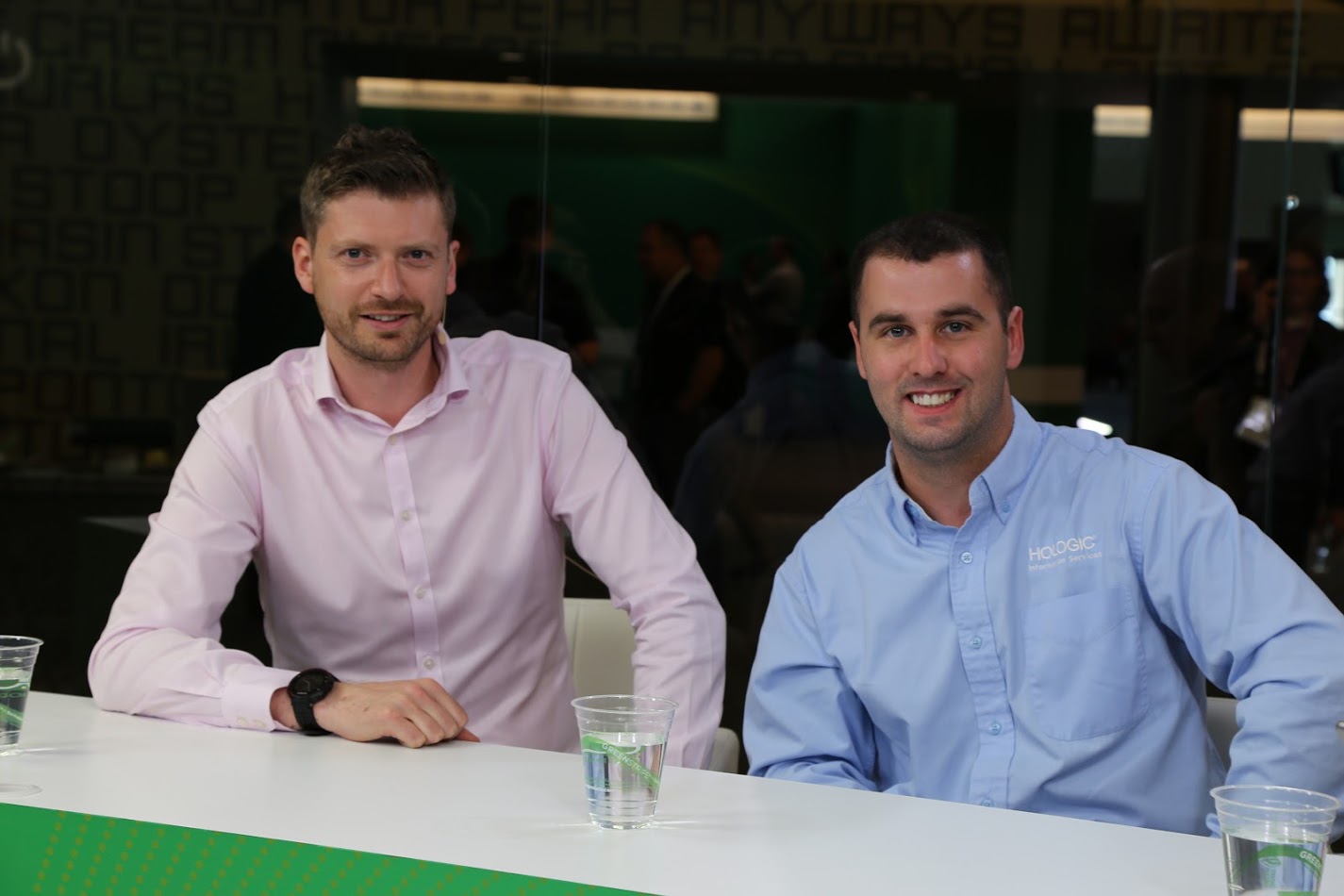
Do those companies that divide workloads between physical data centers and the cloud need backup systems tailored for each? Sticking with blanket product makes life simpler for the information technology department and by itself can improve recovery times, according to Christopher VanAsselberg (pictured, right), manager of server operations at Hologic Inc.
In the past, Hologic had trouble settling on one system. “It was five different backup products depending on what system we were looking at,” VanAsselberg said. His company is now committed to just one, even as it’s infrastructure environment hybridizes.
VanAsselberg joined Martin Hood (pictured, left), information systems manager at Hologic, in an interview with Stu Miniman (@stu) and Dave Vellante (@dvellante), co-hosts of theCUBE, SiliconANGLE Media’s mobile livestreaming studio, during this year’s VeeamOn event in New Orleans, Louisiana. (* Disclosure below.)
Hologic’s interest in cloud has swelled in recent years, but the company’s IT department strives to weigh pros and cons coolly. “The important thing about a cloud strategy is to understand its strengths and its weaknesses,” VanAsselberg said.
A full lift and shift to cloud would be too expensive for the company, Hood explained. VanAsselberg agreed, specifying that virtual machines, in particular, are still cheaper to run on-premises. On the flip side, cloud easily wins against on-prem for certain applications, he added.
Software-as-a-Service applications like email, Skype for Business and Internet of Things apps work optimally in public cloud, VanAsselberg stated. In these cases, calculating cost isn’t as simple as counting beans on compute, memory and storage. “It’s really in the whole package of maintaining these systems, patching these systems, the skill sets to maintain it, etc.,” he said.
Wherever Hologic lands its apps, it currently uses just one backup and recovery system for all. Veeam Software Inc.’s disaster recovery service is highly favored by the company’s IT team for its speed, according to Hood.
“We live in a world where everybody wants things instantly, and it’s no different when it comes to restoring fails,” he said.
Relying on one solution has another benefit that is not immediately obvious: IT personnel become well versed in a single system rather than dabblers in three or four different platforms. In the event of an outage, this serve’s Hologic’s team well, according to VanAsselberg.
“They’re not guessing. They’re not Googling. They just know how to use the system,” he said.
Watch the complete video interview below, and be sure to check out more of SiliconANGLE’s and theCUBE’s coverage of VeeamOn 2017. (* Disclosure: TheCUBE is a paid media partner for VeeamOn 2017. Neither Veeam Software Inc. nor other sponsors have editorial influence on theCUBE or SiliconANGLE.)
Support our mission to keep content open and free by engaging with theCUBE community. Join theCUBE’s Alumni Trust Network, where technology leaders connect, share intelligence and create opportunities.
Founded by tech visionaries John Furrier and Dave Vellante, SiliconANGLE Media has built a dynamic ecosystem of industry-leading digital media brands that reach 15+ million elite tech professionals. Our new proprietary theCUBE AI Video Cloud is breaking ground in audience interaction, leveraging theCUBEai.com neural network to help technology companies make data-driven decisions and stay at the forefront of industry conversations.