









 CLOUD
CLOUD
CLOUD
CLOUD
CLOUD

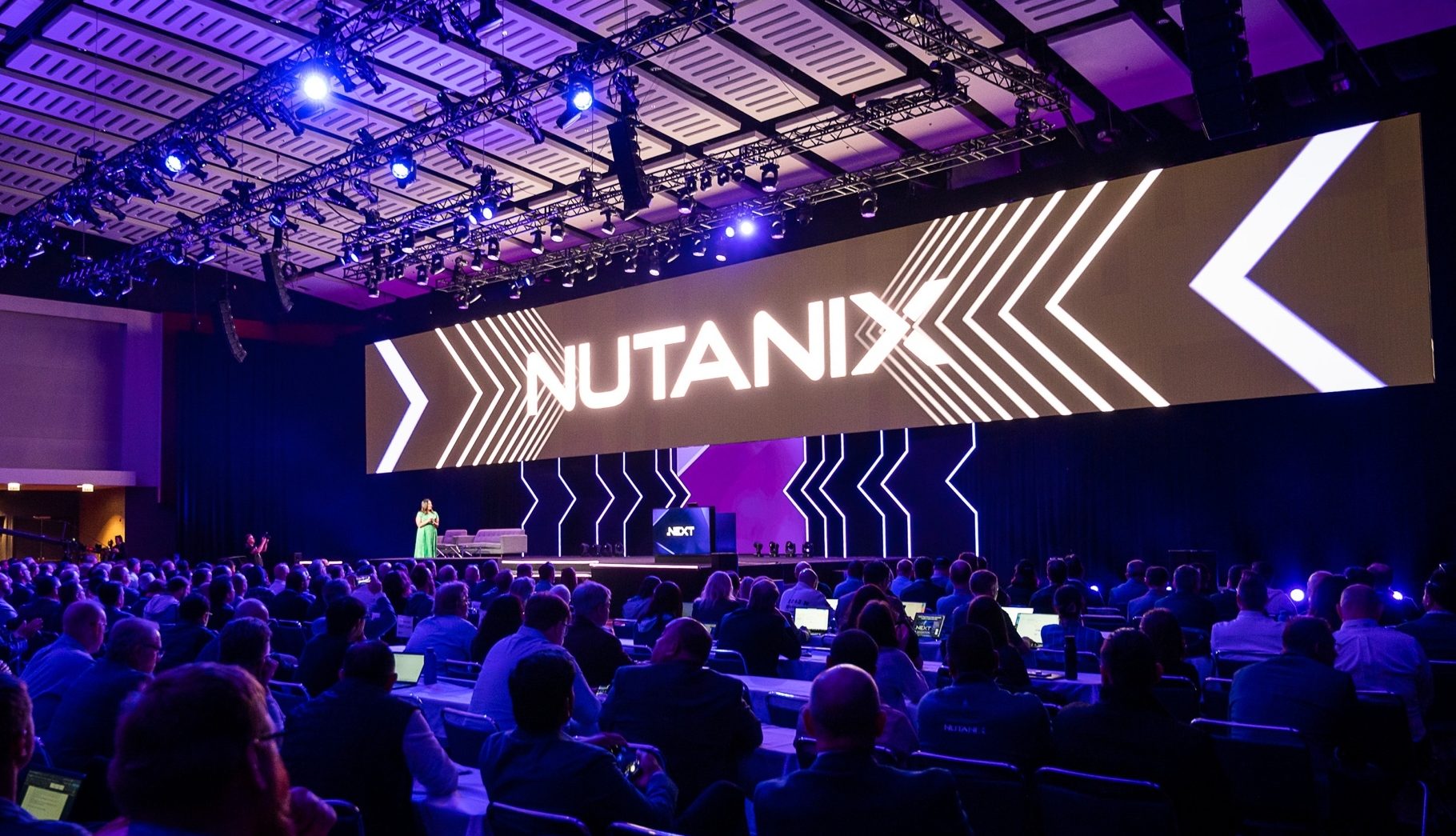
Nutanix Inc. is expanding its Nutanix Cloud Platform this week with new capabilities designed to help enterprises and government agencies build and operate distributed sovereign cloud environments while maintaining centralized security, control and resilience.
The company is also adding new cloud management and migration aimed at enticing users of VMware Inc. virtualization.
The announcement targets organizations facing growing regulatory, privacy, and data-residency requirements as they deploy applications across on-premises data centers, public clouds, and edge locations. Nutanix said the updates enable customers to define and operate their own sovereign cloud architectures across traditional, cloud native and artificial intelligence workloads, including fully disconnected “dark site” environments, without relying on external software-as-a-service control planes.
AI is also providing a tailwind for sovereign clouds, said Lee Caswell, senior vice president of product and solutions marketing. The cost, complexity and security risks of moving large volumes of data to a central cloud for model training is spurring more organizations to look at distributed architectures.
“Historically, sovereignty has been a very tightly constrained boundary,” Caswell said. “We’re finding that as customers start thinking about where data is replicated to and restored to, AI is pushing for a more distributed data and applications world.”
The release of Nutanix Cloud Platform 7.5 is one of the largest updates in the company’s history, with more than 160 new features, Caswell said. Nutanix is responding to changes in how sovereignty is defined as enterprises adopt AI and more distributed application architectures.
Nutanix now delivers what Caswell described as three essential elements of a distributed sovereign cloud: security and control, resilience and global management. Security policies can be set locally and propagated globally across endpoints, while elements that were previously delivered as software-as-a-service can now run on-premises.
Nutanix Central, the company’s distributed cloud management platform that was previously available only as SaaS, can now be deployed in customer-controlled environments. Nutanix Data Lens, which provides security, governance and ransomware resilience for unstructured data, will also be available for on-premises deployments. Caswell said these changes are particularly important for customers who operate in air-gapped, or dark site, environments.
Nutanix is also expanding sovereign cloud support across public cloud providers. Nutanix Government Cloud Clusters on Amazon Web Services Inc. is now available for U.S. federal agencies that want to keep orchestration inside a private environment without external SaaS dependencies. Nutanix Cloud Clusters on Google Cloud is also now generally available in 17 regions worldwide, with additional Microsoft Corp. Azure and AWS regions added in the United States and support for OVH US LLC’s OVHcloud sovereign and trusted cloud services in Europe.
Caswell said sovereign boundaries are defined by operational control rather than geography alone. “Sovereign boundaries are where you can observe, manage, lifecycle and secure your data and applications without exposure to an outside entity,” he said. Unlike most hyperscalers, Nutanix offers license portability and enables customers to retain control of encryption keys when running in public cloud environments.
“If you bought one of our licenses to deploy on your own hardware and you decide to move that workload to a server that you rent from AWS, you can move that license at will,” he said.
The update also strengthens security and compliance for Kubernetes and AI workloads. The Nutanix Kubernetes Platform for managing the popular container orchestrator will include a Federal Information Processing Standards 140-3-validated and Security Technical Implementation Guides-compliant Ubuntu Pro image. That option that is currently under development and Nutanix did not provide a timeframe for delivery. Software-defined networking capabilities, including microsegmentation and zero-trust frameworks, now extend from virtual machines to containerized workloads.
“We always had software-defined networking for VMs,” Caswell said. “Now you can also have it on a Kubernetes container on bare-metal environment.”
For AI workloads, Nutanix Enterprise AI supports government-ready Nvidia Corp. AI Enterprise software, including STIG-hardened and FIPS-enabled Nvidia Inference Microservices. Other new capabilities include stronger identity integration, fine-grained access controls for models and expanded logging and monitoring.
Resilience is another focus of the package of enhancement. Nutanix said customers can now apply tiered disaster recovery policies that prioritize workloads and preserve security policies during failover and restore operations. New capabilities support business continuity even in the event of multiple site or region failures.
“In the past, all applications were treated equally,” Caswell said. “This gives you more control over an orchestrated restore process.”
To reduce operational complexity, Nutanix introduced Nutanix Infrastructure Manager, a new automation tool designed to simplify deployment and lifecycle management. Caswell said this is attracting interest from VMware Inc. customers evaluating alternatives.
“Every VMware customer is looking at alternatives today,” he said. While Nutanix sees few VMware customers looking to switch to a new platform wholesale, “They’re very unlikely to put a new workload on VMware.”
Industry analysts echoed that view. “Distributed sovereign cloud is becoming a priority for organizations that must meet regulatory obligations without disrupting operational consistency,” said Dave Pearson, vice president at IDC.
Nutanix said the new capabilities are designed to help customers maintain sovereignty while continuing to modernize applications across hybrid and multicloud environments.
Support our mission to keep content open and free by engaging with theCUBE community. Join theCUBE’s Alumni Trust Network, where technology leaders connect, share intelligence and create opportunities.
Founded by tech visionaries John Furrier and Dave Vellante, SiliconANGLE Media has built a dynamic ecosystem of industry-leading digital media brands that reach 15+ million elite tech professionals. Our new proprietary theCUBE AI Video Cloud is breaking ground in audience interaction, leveraging theCUBEai.com neural network to help technology companies make data-driven decisions and stay at the forefront of industry conversations.