














 INFRA
INFRA
INFRA
INFRA

INFRA

Ultra-low latency is rewriting the rules of infrastructure design. As enterprises migrate to always-on agentic systems, networks are now required to deliver both nanosecond responsiveness and large-scale performance.
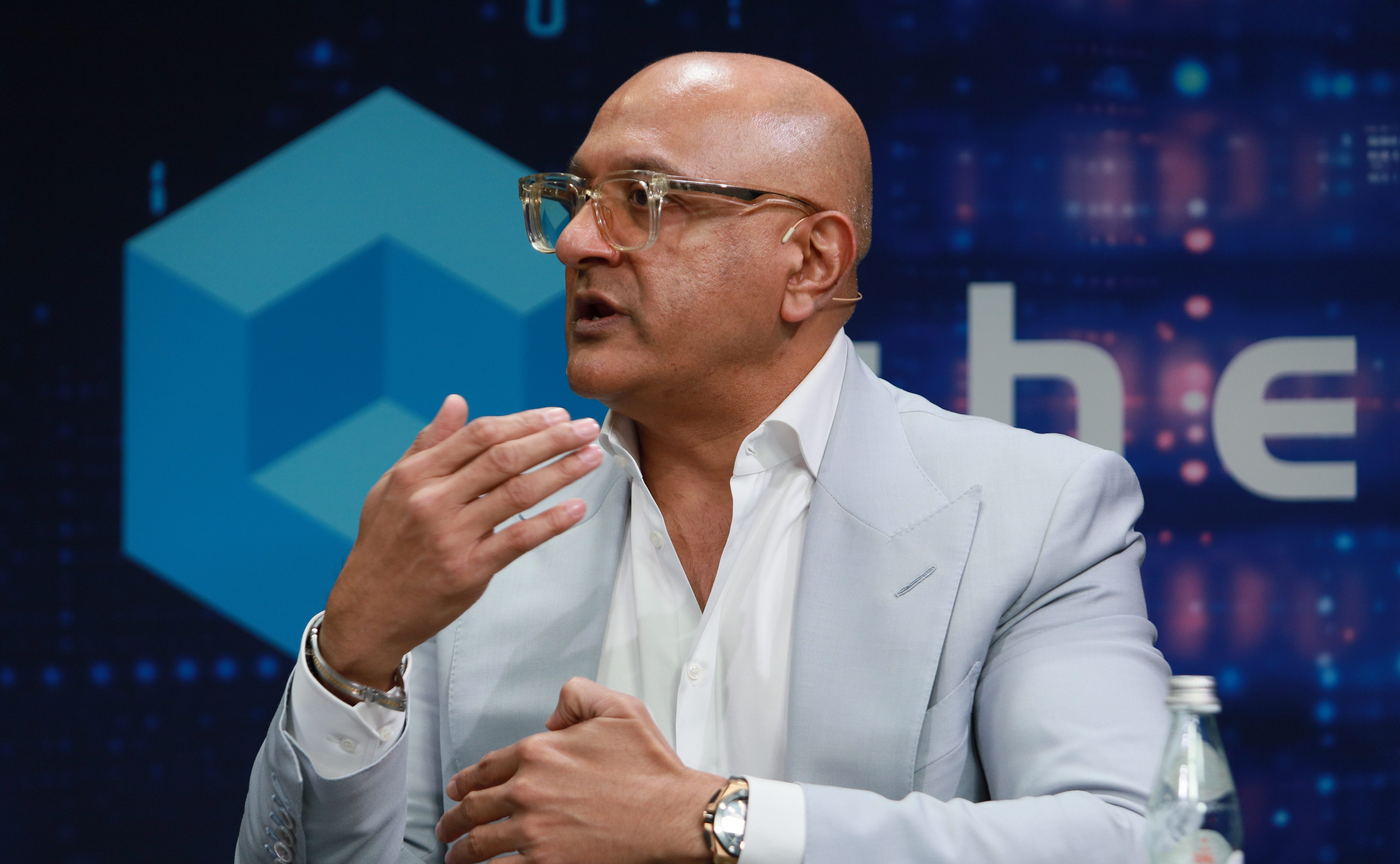
This shift is forcing a rethink of infrastructure, from data centers to the edge. In turn, Cisco Systems Inc. is responding with a full-stack artificial intelligence platform, built from silicon up, according to Cisco President and Chief Product Officer Jeetu Patel (pictured). The company is targeting power, bandwidth and trust constraints as demand continues to outpace available capacity, with data center build-outs potentially approaching $5 trillion in the near term, Patel noted.
“My take on this is in the long term. If you think about this as a seven-to-10-year window, we are grossly underestimating the capacity required to fulfill the needs of AI — underestimating, not overestimating,” Patel told theCUBE. “We are still trailing the demand with supply. We are supply-constrained. Every single bit of token-generation capacity that’s being sold is getting consumed right away. This is not something that you have to grow into the demand side. The demand is already there.”
Patel spoke with theCUBE’s John Furrier and Dave Vellante at MWC Barcelona, during an exclusive broadcast on theCUBE, SiliconANGLE Media’s livestreaming studio. They discussed Cisco’s playbook as global AI infrastructure faces a demand-spurred redesign. (* Disclosure below.)
If that demand is already here, as Patel contends, ultra-low latency becomes more than a performance metric — it becomes a capacity multiplier. In massive AI clusters, packet loss forces training runs to restart, wasting scarce compute. Achieving nanosecond speeds with highly reliable networking reduces those inefficiencies, allowing more token-generation output from the same physical footprint, Patel explained.
“When you think about AI infrastructure, you have to rethink the way that the infrastructure actually operated,” he said. “It’s ultra-low latency, ultra-high performance with energy efficiency [that you need], because we just don’t have enough power in the world to satiate the needs of AI right now.”
This reevaluation extends beyond upgrading switches. As AI systems evolve into always-on digital workers, networking becomes the through-line between data centers and distributed enterprises — and a strategic opening for telecom operators that run that infrastructure, Patel added.
“The reason for this kind of excitement … for telcos is, as you move to this second phase of AI from chatbots to agentic, the entire infrastructure is going to have to be rethought because these agents are going to be working seven-by-24,” Patel said. “They’re going to be very data hungry. They’re going to actually be talking to each other. The ability to interoperate and connect between the data center, where the digital workers live, and the campus branch, where the human workers are, is going to be done through a secure global connectivity fabric, which is, essentially, the service providers.”
But performance alone is not enough. As AI agents become more autonomous, infrastructure must build in guardrails at the network level to ensure systems operate within trusted boundaries, Patel noted. Cisco has separately outlined this approach in its Secure AI Factory architecture, which expands partnerships with Nvidia Corp. and Vast Data Inc. to combine high-performance networking with embedded security controls for agentic workloads. That means the same networks that accelerate AI must also enforce its boundaries.
“You have to protect the agent from the world, prompt injection attacks, data poisoning, all of those things that you could actually do harm to the agent [with],” Patel said. “Second, you have to protect the world from agents. Agents can’t just go awry — you have to make sure that you put guardrails around them.”
Here’s the complete video interview, part of SiliconANGLE’s and theCUBE’s coverage of MWC Barcelona:
(* Disclosure: TheCUBE is a paid media partner for MWC Barcelona. Sponsors of theCUBE’s event coverage do not have editorial control over content on theCUBE or SiliconANGLE.)
Support our mission to keep content open and free by engaging with theCUBE community. Join theCUBE’s Alumni Trust Network, where technology leaders connect, share intelligence and create opportunities.
Founded by tech visionaries John Furrier and Dave Vellante, SiliconANGLE Media has built a dynamic ecosystem of industry-leading digital media brands that reach 15+ million elite tech professionals. Our new proprietary theCUBE AI Video Cloud is breaking ground in audience interaction, leveraging theCUBEai.com neural network to help technology companies make data-driven decisions and stay at the forefront of industry conversations.