 AI
AI
AI
AI





AI

Database powerhouse Oracle Corp. is making its case that database architecture must serve as a trusted foundation for the AI that gets built on top.
The company’s major step into the AI database as a foundational element has been accompanied by a redesigned Oracle Database and the unveiling of the AI Data Platform. Oracle’s releases represent a re-engineering of its core offerings to facilitate customer access to any major AI model by connecting proprietary data.
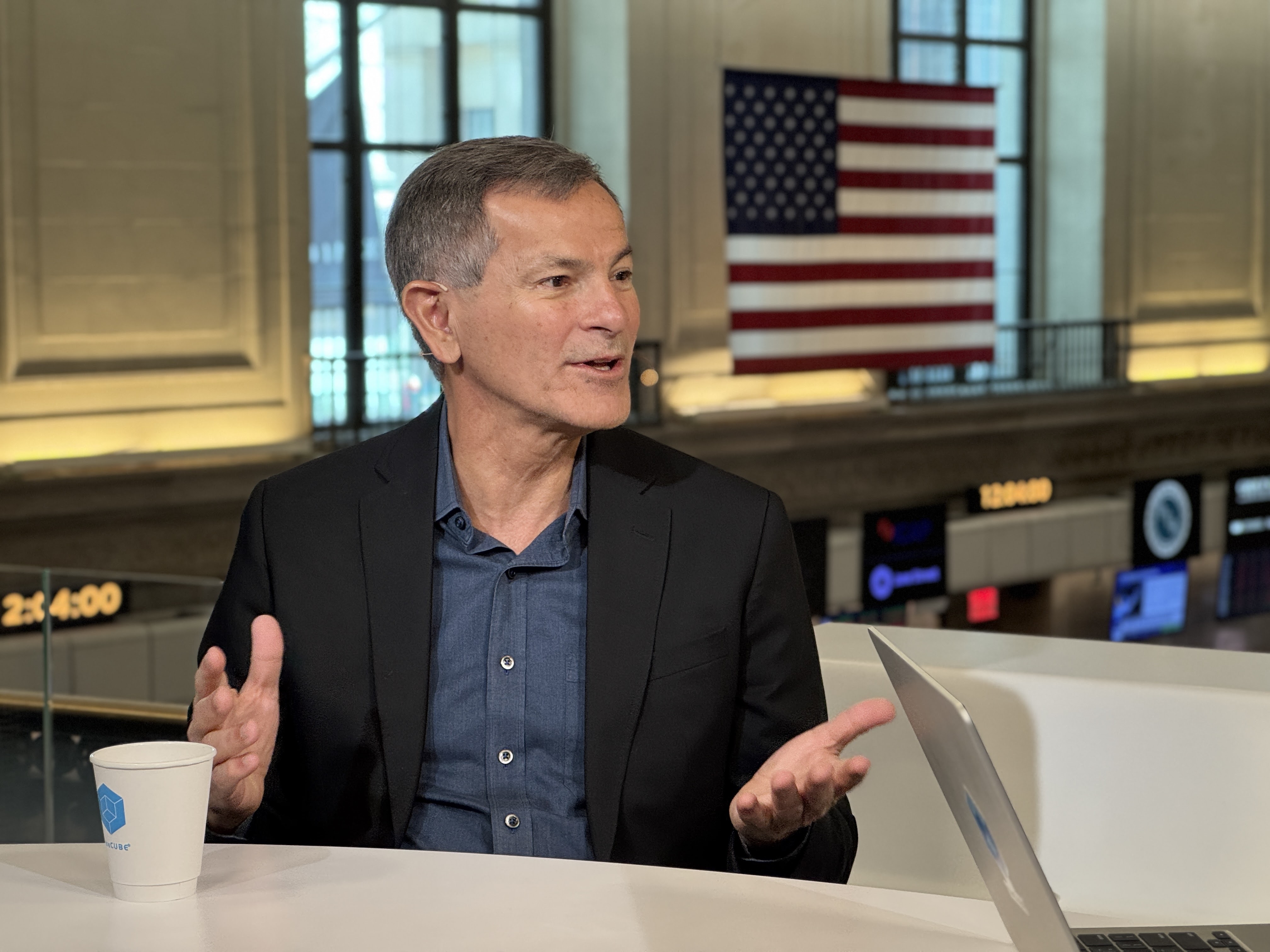
Yet there is an issue that Oracle must deal with as enterprises gravitate towards agentic AI and reshaped architectures. Database providers must demonstrate that the currently accelerated speed of coding and development doesn’t throw security or reliability out the window. This will take trust, as described by Juan Loaiza (pictured), executive vice president of Oracle Database Technologies at Oracle, during theCUBE’s Oracle Data Deep Dive event.
“Suppose I could build a hundred-story high-rise in 20 minutes,” Loaiza told theCUBE, SiliconANGLE Media’s livestreaming studio. “Am I going to move my family into there? Well, you better have a lot of trust in the structure of that building and what it’s built on. Data’s the foundation of everything that is knowledge, and so we are building into the Oracle database the ability to trust things that are built on top of it.”
Reporting from the New York Stock Exchange, theCUBE explored how Oracle is embedding trust through machine learning, vector search and advanced analytics directly into its data platform — and how multicloud integration, lakehouse modernization and governance enable production-ready architectures at scale. (* Disclosure below.)
Here’s theCUBE’s complete video interview with Oracle’s Juan Loaiza:
Here are three key insights you may have missed from the Oracle Data Deep Dive event:
Oracle’s approach to the role of the database in today’s AI world is based on a belief that intelligent applications will depend not only on the performance of a model, but on the integration of AI deeply into the data layer. To facilitate this, Oracle is running agent logic close to the data, through solutions such as the AI Database Private Agent Factory and Autonomous AI Vector Database.
“There are basically two types of agents: There’s reasoning-centric agents and data-centric agents,” explained Tirthankar Lahiri, senior VP for mission-critical data and AI engines at Oracle, in a conversation with theCUBE. “The data-centric agents are really best run co-located with data. We want to eliminate the need for multiple round trips — multiple database accesses. Architecting agentic processing along with data access avoids fragmented or fractured AI. You get AI that runs on clean, real-time, current data without the need to split your data in multiple repositories.”
The adoption of agentic AI has placed new demands on database infrastructure, with burst loads that are large and dynamic. Agents are generating transaction volumes across multi-region, multicloud deployments, and Oracle’s Globally Distributed AI Database offers a high-scale architecture that presents multiple physical databases as a single entity to an application.
This is important to providing a consistent level of performance, according to Wei Hu, SVP of high-availability technologies at Oracle Corp.
“Oracle customers have always asked us for an always-on, no-downtime database system,” Hu told theCUBE. “Such a system needs to survive failures of the server, the machine room, data center, region and cloud. What the Oracle Globally Distributed AI Database does is take this one step further using two technologies. First, we make the whole replicated topology look like a single logical database, so instead of looking at databases with primary peers, replicas and so forth, you see one logical database from the application, as well as from administration. That’s number one. The second thing that we do is provide strong consistency.”
Here’s theCUBE’s complete video interview with Tirthankar Lahiri:
It makes sense in a world where multicloud architectures dominate that AI deployment has followed a similar distributed path. AI demands transaction support, consistent data and the ability to deliver inferencing power at the edge, which is why Oracle has developed GoldenGate, a real-time data replication platform that follows customers across every environment where their data lives.
“Now organizations have these AI data factories that are distributed all over the planet. They’re at the edge; they’re in the large data centers,” according to Jeff Pollock, VP of product management at Oracle, during an appearance on theCUBE. “Really, from a delivery perspective in the GoldenGate business, we have to be able to take GoldenGate where our customers are.”
While GoldenGate is designed to work compatibly with Oracle Database, the platform is not tethered to the company’s data stores. This allows customers to use the solution as a universal replication layer across heterogeneous environments, according to Jagdev Dhillon, SVP of GoldenGate development at Oracle.
“We work very well with the Oracle Database. In fact, we’re probably the best in terms of working with the Oracle Database,” Dhillon said. “We have done a lot of work integrating into the Oracle Database kernel as well, but we support all the different databases and data stores that are available on these clouds.”
Here’s theCUBE’s complete video interview with Jeff Pollock and Jagdev Dhillon:
It’s fun, it’s fast and it’s productive. But is vibe coding truly safe?
This is the dilemma facing users as they guide AI assistants to create applications through natural language conversations. The enterprise world is now facing the challenge of building trusted AI-generated applications without the verification and security controls that were applied when humans wrote all the code.
“Once you generate 10,000 lines of code in less than 10 minutes, can you actually just go deploy it and run it and have it manage your bank system? No, you’re not going to do that,” said Oracle’s Jenny Tsai-Smith, SVP of product management, during an interview with theCUBE. “It’s about using AI in a way that you can then take the generative code and trust it and deploy it.”
Using AI to generate code without opening a massive hole in security means that organizations will have to embrace resilience. That requires structuring security frameworks inside the database itself, according to Ashish Ray, SVP of product management at Oracle.
“Resilience needs to be built inside the database, inside the data structure, which means when customers are investing in our product, they don’t necessarily have to go out and invest in a whole bunch of other technologies,” said Ray, speaking with theCUBE. “Resilience, high availability, performance, security — they all are baked inside the database.”
Here’s theCUBE’s complete video interview with Jenny Tsai-Smith:
To watch more of theCUBE’s coverage of Oracle Data Deep Dive, here’s our complete video playlist:
(* Disclosure: TheCUBE is a paid media partner for the Oracle Data Deep Dive NYC event. Neither Oracle, the sponsor of theCUBE’s event coverage, nor other sponsors have editorial control over content on theCUBE or SiliconANGLE.)
Support our mission to keep content open and free by engaging with theCUBE community. Join theCUBE’s Alumni Trust Network, where technology leaders connect, share intelligence and create opportunities.
Founded by tech visionaries John Furrier and Dave Vellante, SiliconANGLE Media has built a dynamic ecosystem of industry-leading digital media brands that reach 15+ million elite tech professionals. Our new proprietary theCUBE AI Video Cloud is breaking ground in audience interaction, leveraging theCUBEai.com neural network to help technology companies make data-driven decisions and stay at the forefront of industry conversations.