 AI
AI
AI
AI


AI

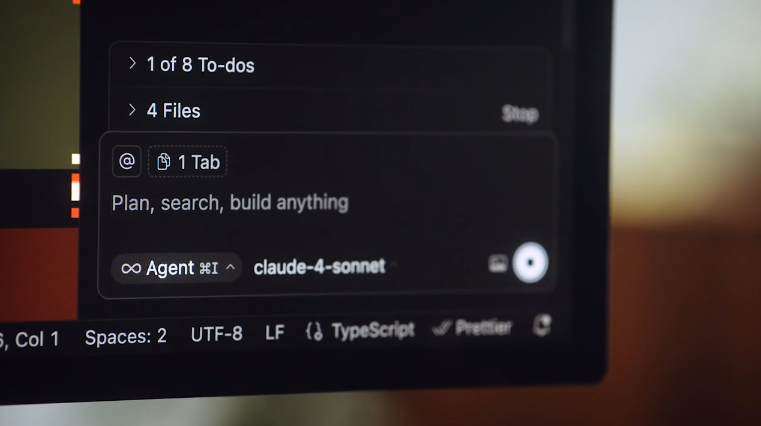
SpaceX Corp. will help Cursor, a venture-backed vibe coding startup, train artificial intelligence models optimized for programming tasks.
The companies announced the initiative on Tuesday. According to SpaceX, the partnership agreement gives it the option to buy Cursor for $60 billion by year’s end. If the space launch provider opts against an acquisition, it will pay $10 billion for the collaboration.
Cursor, officially Anysphere Inc., develops one of the industry’s most popular vibe coding platforms. CNBC reported on Sunday that the company was in talks to raise $2 billion from investors at a valuation exceeding $50 billion. According to Bloomberg, Cursor has since scrapped the round on account of the deal with SpaceX.
SpaceX will give Cursor access to the graphics processing units operated by its xAI unit. According to the aerospace company, its GPU capacity equals the combined processing power of 1 million H100 chips.
The H100 was Nvidia’s flagship AI accelerator for data centers until 2024. The most capable version of the chip, the liquid-cooled H100 SXM, can perform 35 trillion operations per second when processing FP64 data. SpaceX’s xAI unit also uses other, more advanced Nvidia chips in its data centers.
Last week, Business Insider reported that SpaceX plans to give Cursor access to tens of thousands of GPUs. The latter company will reportedly use them to train a coding model called Composer 2.5.
The algorithm is the planned successor to Composer 2, an internally developed AI that Cursor debuted last month. It powers some of the features in the company’s namesake vibe coding platform. The platform uses Composer 2 and third-party models to automate tasks such as rewriting legacy code in a new language.
AI models generate a significant amount of temporary data when processing a prompt. In some cases, that temporary data’s memory footprint exceeds the capacity of the algorithm that generated it. Composer 2 addresses the challenge with a feature that Cursor calls self-summarization. When the temporary datasets produced by the model start approaching capacity limits, it condenses them into a summary that takes up less space.
The Cursor-SpaceX partnership may affect xAI’s development roadmap. Last year, xAI released a model called grok-code-fast-1 that is built to power AI code editors, the same use case for which Composer 2 is optimized. It’s possible that the SpaceX unit will redirect resources from grok-code-fast-1 to other projects.
In a post on X, SpaceX stated that the partnership is intended to “create the world’s best coding and knowledge work AI.” That suggests the models produced through the collaboration will focus on not only coding tasks but also other enterprise use cases.
It’s unclear how SpaceX hopes to realize a return on the up to $60 billion that it intends to spend on the initiative. One possibility is that xAI plans to integrate Cursor-developed into paid products. The company sells access to Grok, its internally-developed line of large language models, through an application programming interface.
The vibe coding market is a large and growing source of revenue for AI model developers such as Anthropic PBC. The Cursor partnership gives SpaceX a bigger presence in that segment, which may help drive up investor interest in its upcoming public offering. SpaceX reportedly hopes to sell $75 billion worth of shares at a $1.75 billion valuation.
Support our mission to keep content open and free by engaging with theCUBE community. Join theCUBE’s Alumni Trust Network, where technology leaders connect, share intelligence and create opportunities.
Founded by tech visionaries John Furrier and Dave Vellante, SiliconANGLE Media has built a dynamic ecosystem of industry-leading digital media brands that reach 15+ million elite tech professionals. Our new proprietary theCUBE AI Video Cloud is breaking ground in audience interaction, leveraging theCUBEai.com neural network to help technology companies make data-driven decisions and stay at the forefront of industry conversations.