 AI
AI
AI
AI



AI

Enterprise AI scaling is accelerating as organizations shift from experimentation to full deployment, embedding intelligence into core workflows. At the same time, agentic systems are driving a broader move toward AI-native operating models. With operating models under pressure from every direction, the question is which enterprises are driving that change and which are simply reacting to it.
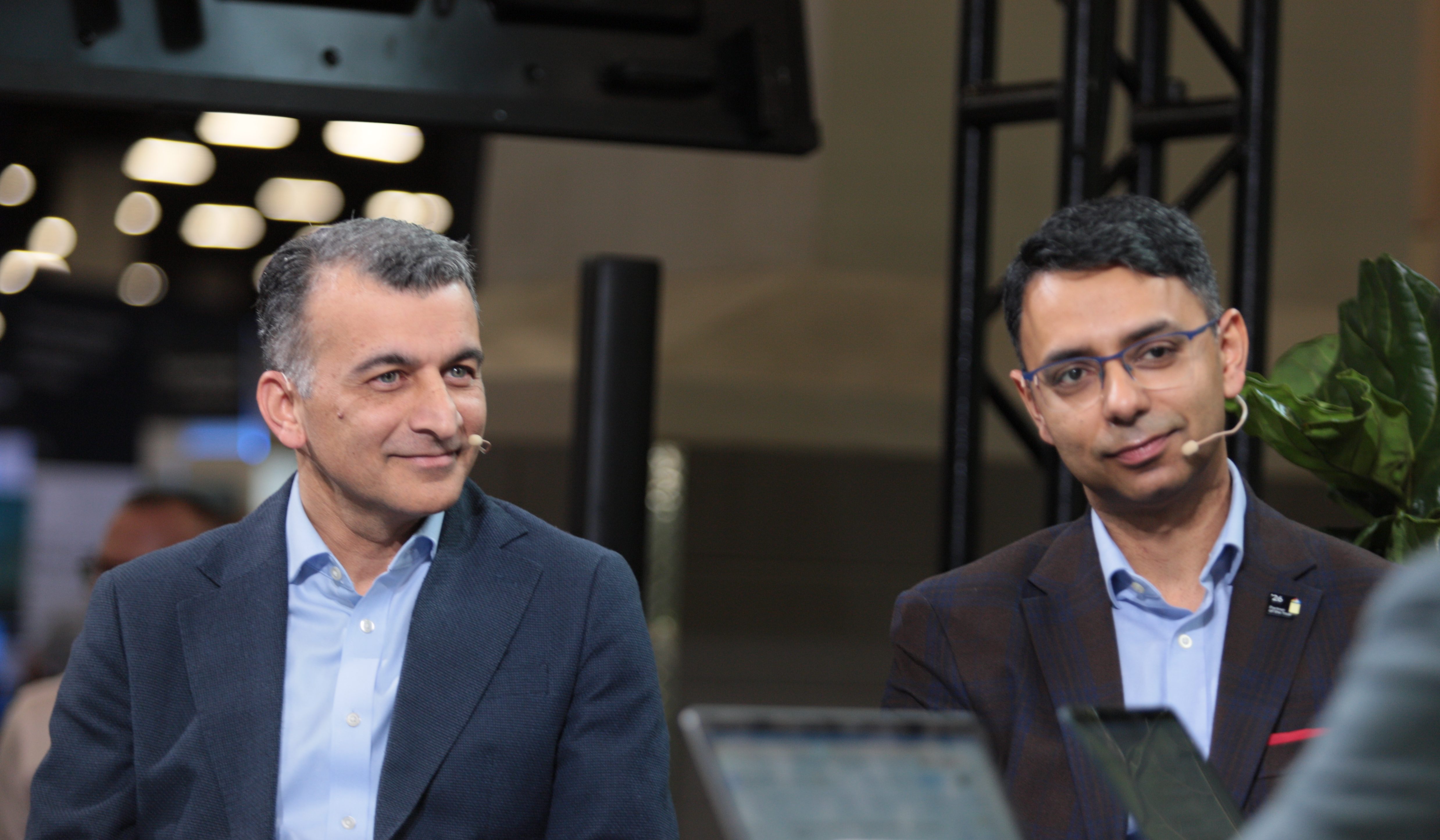
For many organizations, the answer starts with a simple but uncomfortable realization: Deploying AI and transforming around it are not the same thing. The real priority now is making AI tangible, acknowledging that while proof of value matters, driving meaningful organizational change matters even more, according to Amit Kapur (pictured, left), chief AI and services transformation officer of Tata Consultancy Services Ltd. That starts with closing the gap between what executives are told about AI and what they actually experience themselves.
“When you do things first-hand, you know the power of the tool. When you know the power of the tool, you see that it’s something which is far bigger,” Kapur said. “It’s an entire shift in operating model.”
Kapur and Gaurav Syal (right), vice president and global head of AI, cloud and infrastructure services, EMEA, at Tata Consultancy Services, spoke with theCUBE’s John Furrier and co-host Alison Kosik at Google Cloud Next, during an exclusive broadcast on theCUBE, SiliconANGLE Media’s livestreaming studio. They discussed enterprise AI scaling and the growing impact of agentic AI on operating models and business value. (* Disclosure below.)
With more than 600,000 employees and clients spanning nearly every major industry, Tata Consultancy Services is among the firms most directly shaping how enterprises approach that transition, acknowledging that deploying AI at enterprise scale is a fundamentally different problem than using it. While individual users can spin up results in minutes, enterprise deployment demands a far more disciplined approach, according to Syal. Organizations need to approach the issue properly in order to use AI effectively — and safely — at scale.
“You need to have the right guardrails, you need to have the right security and you need to have the right foundation,” Syal said. “Your agentic AI needs to have the right data to make sure that the swarms come together and do the work for you.”
TCS takes that foundation-first philosophy directly into how it works with customers. The focus is on guiding customers through hands-on experience, starting with sessions where leaders use AI themselves to see its impact, according to Kapur. From there, organizations narrow their focus to one concrete business problem.
“We take around 12 to 16 weeks in what we call a rapid build, come back with a production environment of proof of value and say, ‘This works for you,’” Kapur said. “That is a conviction which an enterprise believes in, and that gives them to the ability to scale. Immerse yourself with AI, build it with AI and scale it with AI — [that] is essentially the pathway that we travel.”
Here’s the complete video interview, part of SiliconANGLE’s and theCUBE’s coverage of Google Cloud Next:
(* Disclosure: Tata Consultancy Services sponsored this segment of theCUBE. Neither Tata Consultancy Services nor other sponsors have editorial control over content on theCUBE or SiliconANGLE.)
Support our mission to keep content open and free by engaging with theCUBE community. Join theCUBE’s Alumni Trust Network, where technology leaders connect, share intelligence and create opportunities.
Founded by tech visionaries John Furrier and Dave Vellante, SiliconANGLE Media has built a dynamic ecosystem of industry-leading digital media brands that reach 15+ million elite tech professionals. Our new proprietary theCUBE AI Video Cloud is breaking ground in audience interaction, leveraging theCUBEai.com neural network to help technology companies make data-driven decisions and stay at the forefront of industry conversations.