 AI
AI
AI
AI








AI

Enterprise productivity has long been measured by output and headcount, yet the tools and overhauls meant to improve it keep delivering diminishing returns. The discipline software teams quietly perfected over two decades may now hold the answer — and a Formula One team might be the proof of concept.
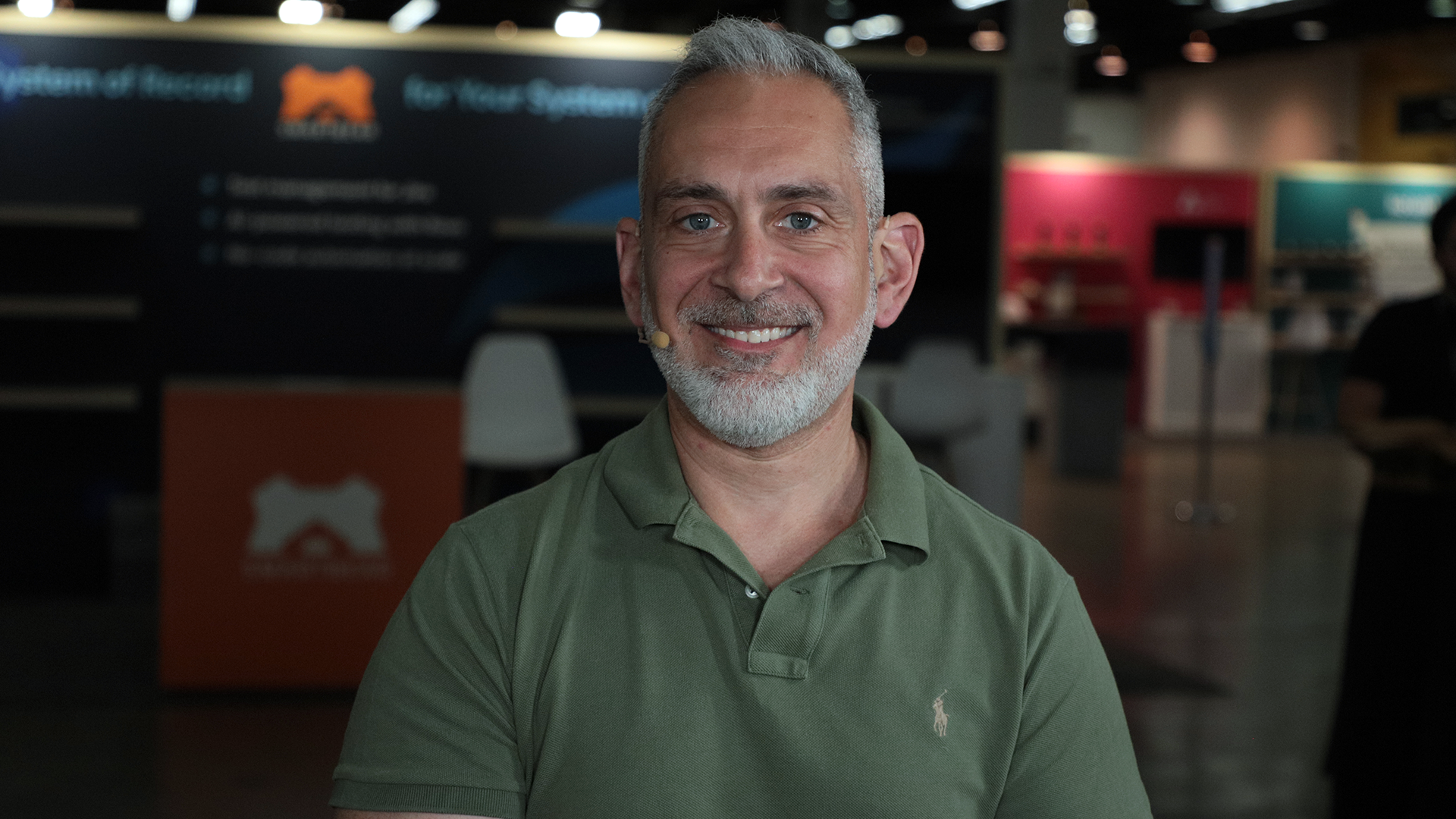
Most enterprise productivity approaches focus on what work gets done, not how work is designed to flow. Atlassian Corp. has been applying developer experience principles across the entire enterprise, suggesting that the friction-removal discipline that made software teams so productive is a universal blueprint, according to Andrew Boyagi (pictured), customer chief technology officer of Atlassian. Multiple flows determine whether an organization moves fast, but purpose flow is especially crucial as poorly structured organizations risk having AI accelerate work in entirely the wrong direction.
“There are four flows of enterprise productivity — purpose flow, workflow, knowledge flow and intelligence flow. Purpose flow is one of the most important flows, which is how information about priorities, about strategy and the context behind those things makes its way from the boardroom to teams across the organization,” Boyagi said. “It’s how teams know they’re working on the right things and that what they’re working on is important. It’s a key enabler for AI, because without a strong purpose flow, teams could be moving really fast, but they could be moving in the wrong direction or working on something that’s not important.”
Boyagi spoke with theCUBE’s Christophe Bertrand and Alison Kosik at the Atlassian Team event, during an exclusive broadcast on theCUBE, SiliconANGLE Media’s livestreaming studio. They discussed how developer experience principles apply to enterprise productivity and Atlassian’s transformation work with Williams Grand Prix Engineering Ltd. (* Disclosure below.)
Atlassian’s real-world proof of concept is its partnership with Williams Racing. Atlassian serves as the team’s Official Title and Technology Partner, embedding its expertise across the organization as Williams pursues a return to the front of the F1 grid. F1 offers an extreme proxy for enterprise performance — every decision is data-driven, every week demands measurable progress and the cost of poor knowledge flow is visible in race results, Boyagi noted. The same systemic barriers blocking software teams, including unclear priorities and AI that can’t access organizational context, repeat across every function.
“When information is locked in emails and spreadsheets, people’s heads — AI’s not going to help you there. It’ll give you a generic answer without any of the context,” Boyagi said. “The journey that we’ve been on with Atlassian Williams F1 is we’ve been coaching them on documenting their knowledge in a single knowledge repository, which is Confluence. What we’ve seen as a result is that information is now being surfaced.”
The same logic extends to how Atlassian thinks about AI agents as teammates. The question of whether AI replaces workers misses the point, Boyagi explained. Developers have spent 20 years absorbing roles that once belonged to separate teams — testing, cloud, infrastructure — and remain the most productive cohort in any organization not because of coding, but because they learned to apply structured systems of work. Applying those principles to marketing, finance and operations unlocks equivalent gains, but only if organizations stop measuring the wrong things.
“The traditional definition [of productivity] is output over time. Output is not helpful,” he said. “It equates to lines of code, to tokens you’ve used. What you want is value delivered faster, and you want to measure that value chain, not just output.”
Here’s the complete video interview, part of SiliconANGLE’s and theCUBE’s coverage of the Atlassian Team event:
(* Disclosure: TheCUBE is a paid media partner for the Atlassian Team event. Sponsors of theCUBE’s event coverage do not have editorial control over content on theCUBE or SiliconANGLE.)
Support our mission to keep content open and free by engaging with theCUBE community. Join theCUBE’s Alumni Trust Network, where technology leaders connect, share intelligence and create opportunities.
Founded by tech visionaries John Furrier and Dave Vellante, SiliconANGLE Media has built a dynamic ecosystem of industry-leading digital media brands that reach 15+ million elite tech professionals. Our new proprietary theCUBE AI Video Cloud is breaking ground in audience interaction, leveraging theCUBEai.com neural network to help technology companies make data-driven decisions and stay at the forefront of industry conversations.