 AI
AI
AI
AI


AI

Google LLC’s search is getting an artificial intelligence makeover today, as the company announced during its Google I/O developer conference that it’s upgrading the search experience to “reimagine it with AI,” making it feel less like a static results page and more like an AI workspace.
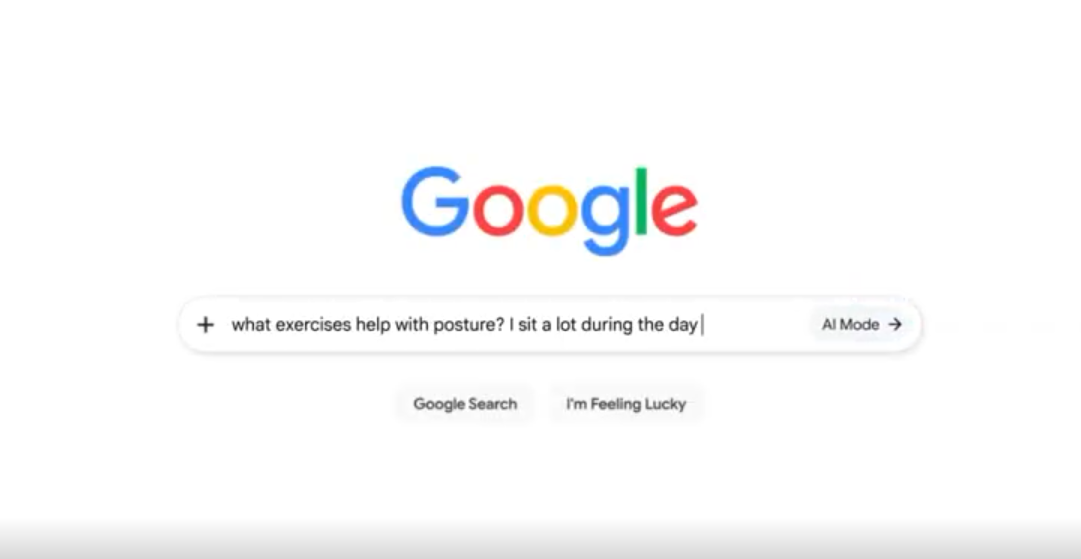
At the forefront, the search box itself will now expand to let users type and view longer queries as they write. According to Google, with the rise of AI-enabled searches, users are beginning to ask longer and more complicated questions about what they’re looking for, and the constrained search box is getting in their way.
Now, as they type, the search box will enlarge so users can see more of what they’re writing, similar to the larger AI Mode query field. It will also allow users to search across different inputs, including text, images, videos and Chrome tabs.
Users will still get a potential AI summary and a list of results in every search, but now they’ll also get an additional follow-up box directly below the AI Overview. This will flow into a conversational back-and-forth within AI Mode. There will no longer be a need to click a button to trigger AI follow-ups.
Google noted that it’s the “agentic era,” meaning more people are getting used to telling an AI system what they want and having it go out and do the work. As a result, the company is adding Search Agents, which can run in the background 24/7, collect information and bring it back.
With information agents running searches, users can customize them with the assets and information they’re looking for, and the agents can scour the web to return regular reports on what has changed. For example, if users are apartment hunting, they could “brain dump” all their requirements for a new home. The agent could then search continuously and report back whenever a matching listing comes onto the market.
Google is also extending agents beyond simply finding information, using AI to generate new interfaces when a list of links or a written answer is not enough.
To do this, the company is bringing the power of agentic coding into Search by incorporating the company’s Antigravity tool and its newly released Gemini 3.5 Flash model. Together, these tools can build an appropriate mini app that provides a slide, visual or other interactive experience to help elucidate the subject.
For example, if a user asks for information on the solar system and how the planets move in relation to one another, the system might build a semi-interactive visualization with the sun in the center and the planets orbiting around it. It can also create custom components such as interactive tables, graphs or similar simulations. Google calls these “generative UI,” or user interfaces.
Growing out of this experience, some users might be more interested in building their own apps, not just having a mini app for a one-off question. For example, if users have something they search for over and over, such as being on a diet or following a health routine, they could ask Search to build them a custom fitness and diet tracker. It could tap into local maps and real-time sources such as weather, and provide a tracker for fitness routines, routes with maps, a calorie spreadsheet and more.
This experience will roll out to users over the summer for Pro and Ultra subscribers.
Support our mission to keep content open and free by engaging with theCUBE community. Join theCUBE’s Alumni Trust Network, where technology leaders connect, share intelligence and create opportunities.
Founded by tech visionaries John Furrier and Dave Vellante, SiliconANGLE Media has built a dynamic ecosystem of industry-leading digital media brands that reach 15+ million elite tech professionals. Our new proprietary theCUBE AI Video Cloud is breaking ground in audience interaction, leveraging theCUBEai.com neural network to help technology companies make data-driven decisions and stay at the forefront of industry conversations.