 AI
AI
AI
AI





AI

Enterprises have reached an agentic inflection point where the shift from AI-first experimentation to AI-native operations is forcing a fundamental redesign of infrastructure and business processes.
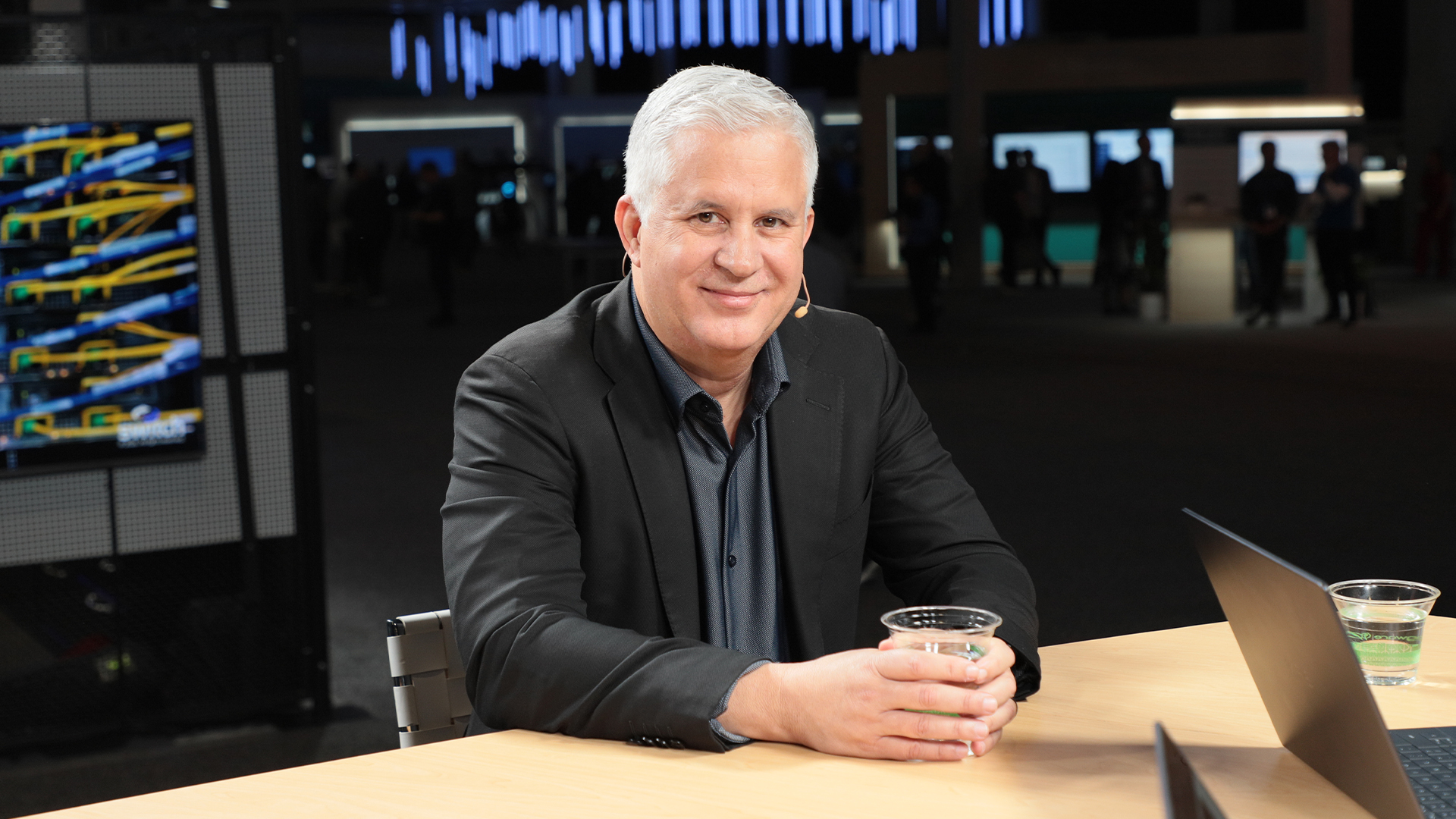
That distinction — between companies that add AI to existing processes and those that redesign processes around AI — is becoming the defining competitive variable, according to Arthur Lewis (pictured), president of the Infrastructure Solutions Group at Dell Technologies Inc. As Nvidia Corp. Chief Executive Officer Jensen Huang declared from the Dell Technologies World stage that AI has crossed into genuinely useful, enterprise-grade territory, the moment underscored a deepening alliance between Dell and Nvidia — one that is reshaping not just what enterprises can buy, but how they must fundamentally rethink the way they operate.
“We’ve gone from technology that allows customers to be AI-first, to technology that allows customers to be AI-native,” Lewis said. “Customers actually see exactly what Jensen said on stage yesterday — very useful AI. It’s understandable to the enterprise. They know exactly what needs to happen. This notion of remapping all of [the] processes in addition to the technology transformation — both of these things must go together.”
Lewis spoke with theCUBE’s John Furrier and Dave Vellante at Dell Technologies World 2026, during an exclusive broadcast on theCUBE, SiliconANGLE Media’s livestreaming studio. They discussed the agentic inflection point, the shift from AI-first to AI-native and Dell’s expanded AI factory portfolio. (* Disclosure below.)
The pace of AI adoption inside the Dell AI Factory has accelerated sharply, underscoring just how fast the agentic inflection point is approaching. Dell now counts more than 5,000 AI Factory customers globally, adding roughly 1,000 in a single quarter — a jump that Lewis attributed directly to the emergence of agentic technology making AI immediately legible and actionable for enterprise buyers.
“We see customers that are not thinking about remapping their processes and they’re simply dropping AI on top of current processes,” Lewis said. “This is what gets them 10%, 15%, 20% productivity. But the customers that are remapping everything and then using AI — those are the AI-native customers. We’ve moved away from Agile to something called spec-driven development. Spec-driven development is an entirely remapped workflow for the software development lifecycle, all built on agentic harness. Now you get into 10X, 20X, 30X productivity gain — this is what it means to be AI-native.”
Underlying that productivity leap is a data strategy problem that most enterprises have yet to solve. As Dell’s broader portfolio announcements make clear, fragmented data silos remain the primary obstacle to production AI at scale, Lewis noted. To address that challenge, Dell has structured its AI Data Platform around a layered ingest, transformation and query architecture designed to make every byte of enterprise data available as fuel for AI workloads.
“Number one is you need a very strong ingest engine,” Lewis said. “We have the orchestration engine, which is built to ingest data so it can be discovered, it can be cleansed, it can be labeled and it can be transferred into vector graphs, knowledge graphs, whatever the case might be. Then you got the Dell data engines which are built to transform and query that data at scale. You have everything that you need to build the type of data structure that you need for your company.”
But that data foundation is only part of the equation. Token economics are emerging as the next frontier of enterprise infrastructure planning, with the cost and efficiency of inference now becoming a line item in corporate profit and loss statements, Lewis added. Maximizing GPU utilization is central to that equation, and Dell’s answer is the rack-scale model — shipping fully integrated, pre-optimized racks that bundle compute, networking, storage and data management into a single product rather than leaving customers to assemble components. As part of the latest portfolio refresh announced at Dell Technologies World, the company also unveiled its 18th-generation PowerEdge portfolio, PowerStore Elite, the Lightning parallel file system and Exascale Storage — a software-defined architecture that lets customers deploy file, block, object or disaggregated inference storage on a common hardware base.
“With an AI factory, you’re at 100% GPU utilization,” Lewis said. “That’s the benefit of buying a full-stack solution. It’s the compute, it’s the network, it’s the storage — all of these things working together because we want to make sure that everything is optimized so you maximize the power of the GPU. If your network is stalled, if your data is poor, if your storage is slow, all of that will affect the output and the utilization of the GPU.”
Here’s the complete video interview, part of SiliconANGLE’s and theCUBE’s coverage of Dell Technologies World 2026:
(* Disclosure: TheCUBE is a paid media partner for Dell Technologies World. Neither Dell, the sponsor of theCUBE’s event coverage, nor other sponsors have editorial control over content on theCUBE or SiliconANGLE.)
Support our mission to keep content open and free by engaging with theCUBE community. Join theCUBE’s Alumni Trust Network, where technology leaders connect, share intelligence and create opportunities.
Founded by tech visionaries John Furrier and Dave Vellante, SiliconANGLE Media has built a dynamic ecosystem of industry-leading digital media brands that reach 15+ million elite tech professionals. Our new proprietary theCUBE AI Video Cloud is breaking ground in audience interaction, leveraging theCUBEai.com neural network to help technology companies make data-driven decisions and stay at the forefront of industry conversations.