




 AI
AI
AI
AI

AI

AI spending is outpacing every budgeting model enterprise finance teams have built, and the gap between what tokens cost on paper and what organizations actually owe is becoming an operational crisis. As FinOps evolves into a boardroom strategy, the discipline is now being forced to reckon with a fundamentally new unit of technology referred to as tokenomics.
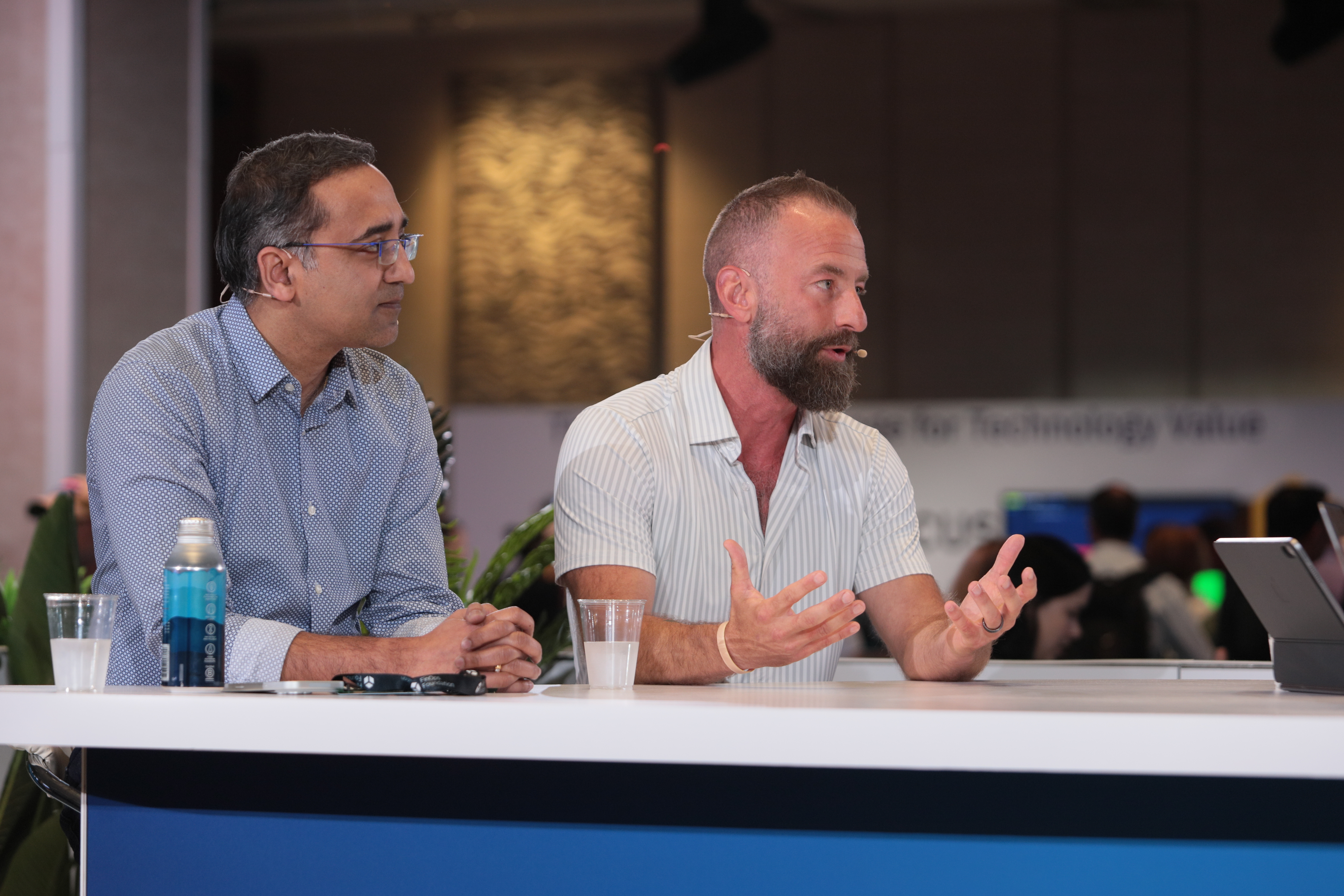
The pressure has become acute enough that the Linux Foundation announced its intent to launch the Tokenomics Foundation, a new standards body dedicated to open benchmarks and best practices for AI token economics, according to J.R. Storment (pictured, right), vice president and general manager of the Linux Foundation and executive director of the FinOps Foundation Project, a Series of LF Projects LLC.
“The problem right now is not that models are hard to use — they’ve actually never been easier,” he said. “The hardest thing that organizations struggle with is: I have a giant bill from an AI provider — who’s responsible and what are they using it for? That’s all a building block to get to how do we show the value on it.”
Storment and Nishant Gupta (left), chief availability officer of Salesforce Inc., spoke with theCUBE’s John Furrier and Paul Nashawaty as part of a day two keynote analysis at FinOps X 2026, during an exclusive broadcast on theCUBE, SiliconANGLE Media’s livestreaming studio. They discussed the rise of tokenomics as a discipline, the launch of the Tokenomics Foundation and how enterprises are navigating the collision between AI cost explosions and the need for financial accountability. (* Disclosure below.)
Managing token spend requires a fundamentally different operational model than what FinOps built for the cloud. Token costs don’t map predictably to business outcomes, the telemetry is sparse and the blast radius of a poorly governed agentic workflow can dwarf anything seen in a typical cloud overage, Gupta noted.
“The key thing that’s different compared to traditional FinOps practice is just the completely different nature of how to think about tokens,” he said. “It’s an abstract quantity. It’s very hard to relate tokens to a business outcome, very hard to relate input and output tokens in a predictable manner. That all impacts the economics of it significantly.”
The urgency is real. Goldman Sachs projects global token usage to grow 24 times by 2030, yet most enterprises today lack the visibility to know where their tokens are going before the monthly bill arrives. Storment noted that some organizations are only discovering they have blown their full-year budgets when the invoice lands — 30 days too late to course-correct. The Tokenomics Foundation will keep a single, consolidated practitioner community alongside FinOps while launching dedicated working groups to define the primitives of the token economy, he explained.
“The most important thing is that the FinOps Foundation keeps doing everything it’s been doing,” Storment said. “We’re going to expand that sphere of influence to touch on some new areas, and we’re going to bring a new part of this conversation into it — which is the tokenomics side.”
Here’s the complete video interview, part of SiliconANGLE’s and theCUBE’s coverage of FinOps X 2026:
(* Disclosure: TheCUBE is a paid media partner for the FinOps X event. Neither the FinOps Foundation, the sponsor of theCUBE’s event coverage, nor other sponsors have editorial control over content on theCUBE or SiliconANGLE.)
Support our mission to keep content open and free by engaging with theCUBE community. Join theCUBE’s Alumni Trust Network, where technology leaders connect, share intelligence and create opportunities.
Founded by tech visionaries John Furrier and Dave Vellante, SiliconANGLE Media has built a dynamic ecosystem of industry-leading digital media brands that reach 15+ million elite tech professionals. Our new proprietary theCUBE AI Video Cloud is breaking ground in audience interaction, leveraging theCUBEai.com neural network to help technology companies make data-driven decisions and stay at the forefront of industry conversations.