 BIG DATA
BIG DATA
BIG DATA







BIG DATA

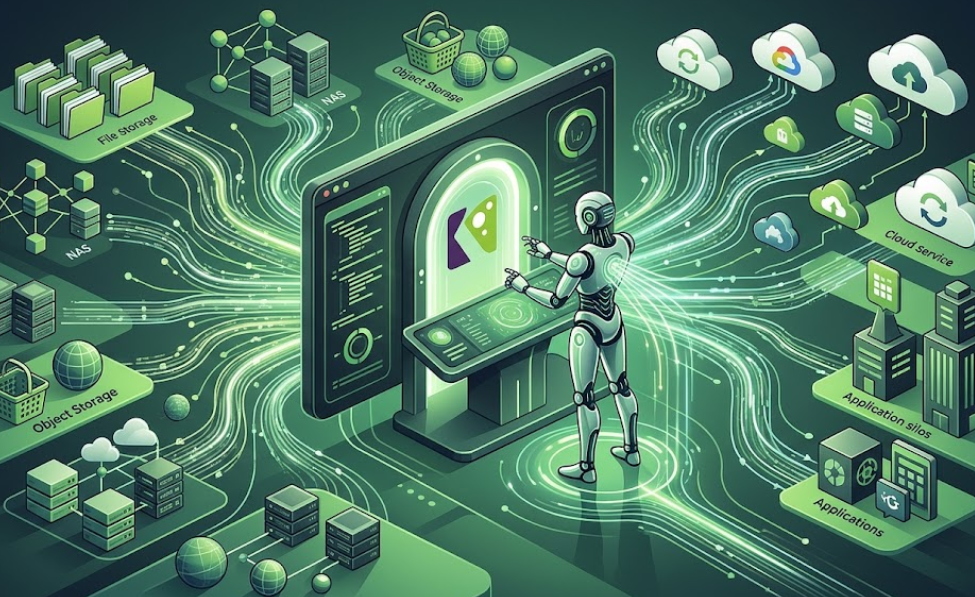
Big data management company Komprise Inc. is trying to make life easier for artificial intelligence agents and large language models that leverage the open-source Model Context Protocol to access third-party data. With today’s launch of its new Universal File MCP tool, it’s offering a single interface they can use to query any kind of data source, no matter where it’s located.
MCP has become a vital part of the infrastructure ecosystem for AI agents. First developed by Anthropic PBC, it provides a common standard for agents to connect with third-party data sources and software, so they can enhance their knowledge and utilize tools to take actions on behalf of humans.
But according to Komprise co-founder and President Krishna Subramanian, it has become almost too successful. These days, almost every technology company has released a dedicated MCP server to help agents to connect to their own platforms and tools, resulting in what he calls “MCP bloat,” with serious implications.
“AI is overloaded with multiple tool definitions, resulting in lower accuracy and slower performance rather than a productivity boost,” Subramanian said. “Connecting unstructured data to AI complicates matters, as this can be millions to billions of files across disparate hybrid storage.”
It’s not just sluggish performance and lower accuracy that enterprises need to worry about. MCP bloat is also one of the main factors driving up the costs of running AI agents. Subramanian said token consumption can escalate dramatically. He pointed to a recent study by McKinsey Co. that revealed how almost 60% of agentic token consumption is being driven by “response refinement,” which refers to the behind-the-scenes token loops, where sub-agents constantly process data over and over again as part of their calculations.
Subramanian said most organizations struggle to discover and understand petabytes of unstructured data that spans multiple storage silos, making it all but impossible to use for AI without running up exorbitant costs. “While MCP connections are valuable for quickly surfacing data for a user’s query, they haven’t tackled the data readiness problem nor high token costs,” he said.
Komprise’s Universal File MCP aims to get around this problem by rightsizing AI responses to ensure that only the most important unstructured data is actually fed to AI agents. Subramanian explained that it identifies the right data sources needed to help an agent fulfil a request, and will then send it just the right information, enriched with context and governed by user-specific access permissions. It builds on a number of capabilities Komprise has previously developed to enable AI data access.
For instance, the Universal File MCP enforces secure, governed data access by making sure users can only receive responses based on data they have permission to access. It leverages the Komprise Global Metadatabase to ensure a consistent schema across all storage resources.
Meanwhile, the Komprise AI Preparation & Process Automation tool helps to extract contextual metadata from each file it returns. The system works by loading the metadata first, allowing AI agents to know which files they need to access. The company has also built noise filters to eliminate irrelevant data and prevent it being processed by agents and driving up token costs.
Subramanian said these capabilities support a number of agentic use cases. In the case of a clinician, for example, they would be able to ask a large language model to find a specific set of pathology images and the query would automatically filter out that data based on KAPPA-enriched context and user permissions, so it returns the right images requested. Alternatively, an information security professional might use it to quickly discover non-compliant files or search for archived research data filtered by project keywords.
The best thing about it is that it works with any data source, whether it’s managed by Komprise or not. “While different vendors may be adding MCP interfaces to their storage or clouds, Komprise provides a single, unified interface to all the unstructured data in an enterprise across multivendor network-attached storage, object, cloud and application siloes with enriched metadata,” Subramanian explained.
Data Center Intelligence Group analyst Todd Dorsey said Komprise is not only simplifying how AI can access unstructured data at scale, but also making it much more efficient. He believes it’s a natural evolution of the MCP standard.
“The first wave of MCP servers solved the issue of connecting AI to enterprise data,” he explained. “But it’s critical to send AI only the files it needs to answer questions across a mix of NAS, object and cloud storage enterprises typically run, rather than a single vendor footprint. Komprise is taking a notable step toward simplifying the curation of unstructured data for AI.”
Support our mission to keep content open and free by engaging with theCUBE community. Join theCUBE’s Alumni Trust Network, where technology leaders connect, share intelligence and create opportunities.
Founded by tech visionaries John Furrier and Dave Vellante, SiliconANGLE Media has built a dynamic ecosystem of industry-leading digital media brands that reach 15+ million elite tech professionals. Our new proprietary theCUBE AI Video Cloud is breaking ground in audience interaction, leveraging theCUBEai.com neural network to help technology companies make data-driven decisions and stay at the forefront of industry conversations.