 INFRA
INFRA




INFRA

Data center telemetry, sandboxed AI workloads and fleets of agents are pushing more machine-to-machine traffic through infrastructure than ever before, exposing the limits of messaging systems built for steadier demand.
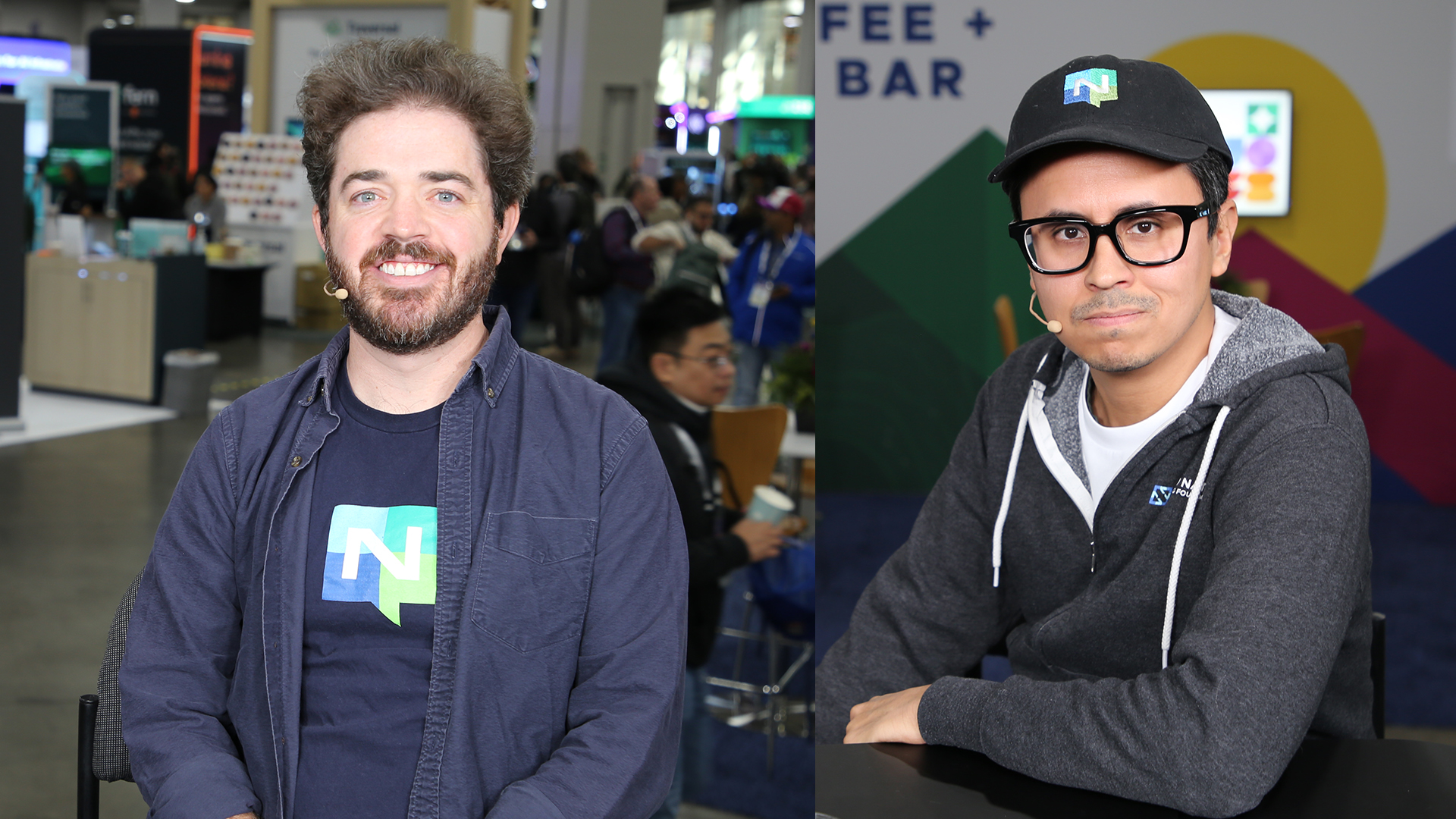
That shift is drawing attention to the Neural Autonomic Transport System, an open-source messaging system that lets applications and services exchange messages by topic. Created in 2010, NATS graduated from the Cloud Native Computing Foundation in November 2026. Its simple design suits AI workloads, according to Andrew Connolly (pictured, left), NATS project maintainer at Synadia Communications Inc., a provider of managed NATS services. When AI tools like Lovable can turn a plain-language prompt into a working web app, the messaging layer has to keep updates flowing as sandboxes come and go.
“What’s changed in the current context, or landscape, is everything is really ephemeral. If you take the Lovable example, connections coming and going really fast, tons of churn, tons of sandboxes, all these things spinning up, spinning down,” Connolly said. “Not every technology can handle that.”
Connolly and Waldemar Quevedo (right), project maintainer of NATS at Synadia, spoke with theCUBE’s John Furrier and Rebecca Knight at KubeCon + CloudNativeCon NA, during an exclusive broadcast on theCUBE, SiliconANGLE Media’s livestreaming studio. They discussed how NATS handles traffic from short-lived sandboxes, carries data center telemetry and helps AI agents hand off work. (* Disclosure below.)
The demands go well beyond app sandboxes. The project itself has grown from single-cluster deployments into a system that spans data centers, regions and clouds, with one AI app builder recently rebuilding its real-time service on NATS to serve millions of subscriptions, Quevedo noted.
“NATS has evolved to be able to communicate multiple data centers with a super cluster topology with the gateways,” Quevedo said. “It is smart [at routing] the interest graph out to multiple regions, multiple availability zones, multi-cloud.”
Some data center operators use NATS to carry power and cooling telemetry, and Nvidia Corp. built its AI factory event bus on the system as part of its DSX reference architecture, Connolly said. NATS can also route messages across fleets of AI agents, with its JetStream persistence engine and key-value store preserving the state agents need to hand off work.
“In some sense, agentic systems are just microservices systems, but at a bigger scale,” Connolly said. “NATS was good for microservices. It’s going to be great for AI agents.”
Here’s the complete video interview, part of SiliconANGLE’s and theCUBE’s coverage of KubeCon + CloudNativeCon NA:
(* Disclosure: The Linux Foundation sponsored this segment of theCUBE. Neither The Linux Foundation nor other sponsors have editorial control over content on theCUBE or SiliconANGLE.)
Support our mission to keep content open and free by engaging with theCUBE community. Join theCUBE’s Alumni Trust Network, where technology leaders connect, share intelligence and create opportunities.
Founded by tech visionaries John Furrier and Dave Vellante, SiliconANGLE Media has built a dynamic ecosystem of industry-leading digital media brands that reach 15+ million elite tech professionals. Our new proprietary theCUBE AI Video Cloud is breaking ground in audience interaction, leveraging theCUBEai.com neural network to help technology companies make data-driven decisions and stay at the forefront of industry conversations.