 AI
AI
AI
AI






AI

Artificial intelligence is no longer a novelty — now companies are demanding a return on their AI investments, with the governance to back it up.
A recent “Agentic AI Study” from Qlik Technologies Inc. found that while 97% of enterprises have funding in place for agentic AI, only 18% have been fully deployed. Moreover, only 19% of those surveyed had a defined return-on-investment framework. The biggest bottlenecks on AI adoption are data quality, availability and governance, according to Qlik. Without that foundation, organizations will struggle to create AI value.
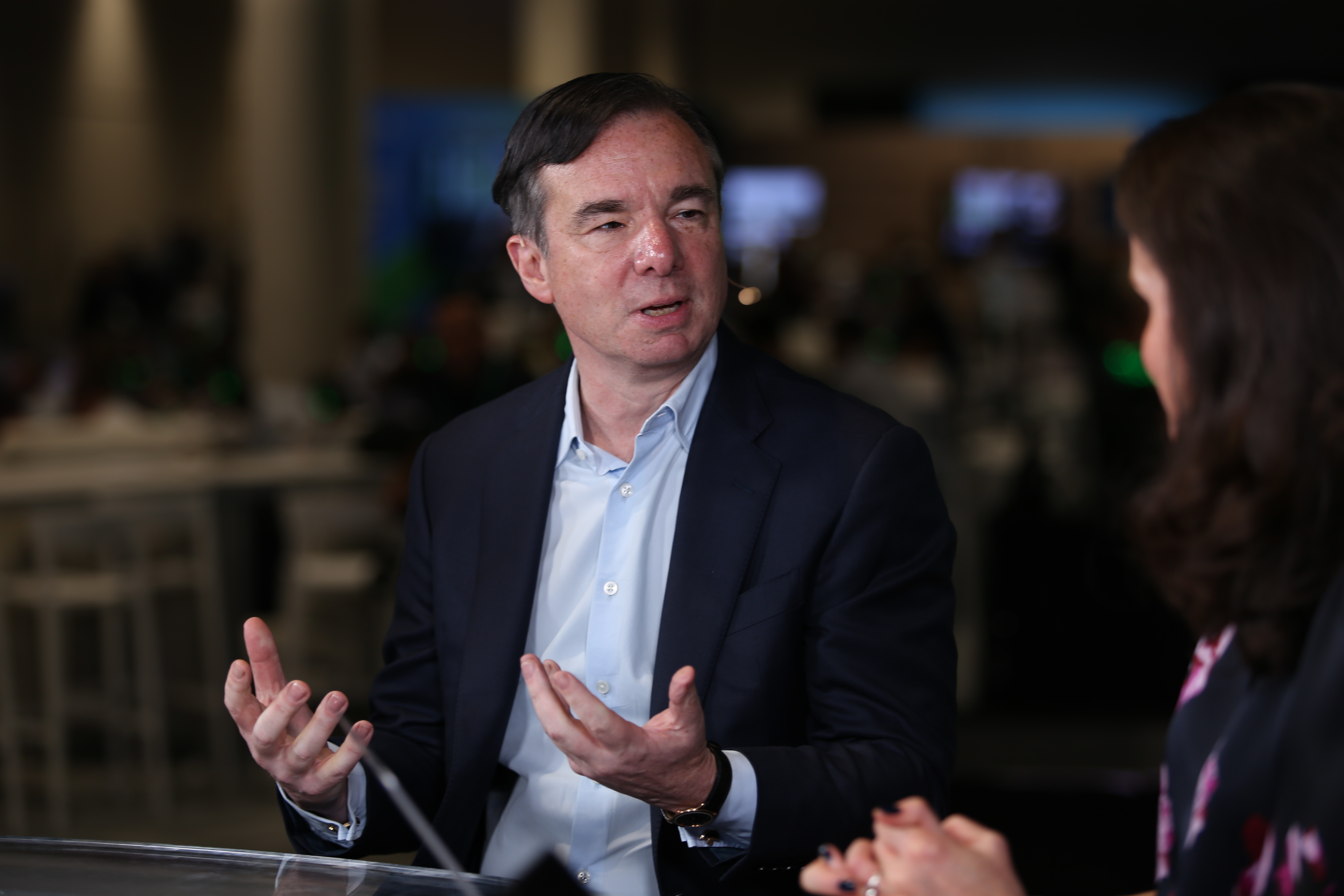
“It starts with the realization that there are no shortcuts,” said Mike Capone (pictured), chief executive officer of Qlik, in an interview during the recent Qlik Connect event. “Oftentimes, customers actually have to fail at something before they understand, ‘OK, we really do need to go back and build a trusted platform with our data. We have to build all the AI data pipelines and put all the governance and quality controls around that before we can start really using AI responsibly.’”
Capone spoke with theCUBE’s Rebecca Knight and Rob Strechay at Qlik Connect, during an exclusive broadcast on theCUBE, SiliconANGLE Media’s livestreaming studio. During the event, Qlik leaders and partners gave insight into Qlik’s strategy for AI adoption and how companies can turn AI investments into measurable business value. (* Disclosure below.)
Here are three key insights you may have missed from Qlik Connect 2026:
Companies are so eager to implement AI that many have not taken the time to build a trustworthy data foundation. The lack of preparation can result in unreliable models and, critically, unreliable ROI. That’s why Qlik uses an AI trust score, which evaluates whether or not a piece of data is reliable enough to go into its models.
“The big conversation has really pivoted. AI used to be a novelty, but now it’s truly around value creation,” Capone told theCUBE. “Companies are spending a lot of money on AI. There’s a lot of experimentation, and that was fun in the beginning. But now CFOs are weighing in and they’re saying, ‘Where’s all this money going — how am I getting value?’”
Capone was joined by Ed Dunger, director of data and operations systems at HelloFresh SE, the meal kit delivery company. HelloFresh uses Qlik Predict to identify at-risk deliveries and automatically trigger recovery actions, improving customer retention. The key is not expecting the model to be 100% perfect, but rather looking for better net results, according to Dunger.
“When we left it to a human, they would quite often wait because they wanted all the facts to make a decision,” he said. “AI sped that decision up … and quite often, by delaying, you didn’t actually give the customer that great experience you could have given them if you did let the AI act within those boundaries that you’ve set for your risk parameters.”
Here’s theCUBE’s complete video interview with Mike Capone and Ed Dunger:
Fear of keeping up with the AI trend has led many adopters to neglect a necessary step: implementing data quality and governance. Governing your models won’t slow you down, according to James Fisher, chief strategy officer at Qlik, but rather ensure that you won’t run into further hurdles down the line.
“I’m a big fan of the phrase ‘go slower to go faster,’” he said. “By creating and taking the time to build that foundation — to think about where it’s going to be used, how it’s going to be applied — just that little step, that little extra time you take there will provide exponential benefits long term, whether that’s performance of the AI application [or] whether that’s performance of the agent.”
Qlik Answers is part of Qlik’s solution for customers needing a reliable data foundation. It offers governed data products with a conversational AI interface that can communicate complex ideas to customers.
“We’ve seen this big shift from trying to just apply AI to a problem to thinking about what is needed architecturally to bring that data together — at the right latency, in the right format — and deliver that in a way that it’s consumable to AI applications,” Fisher said.
Embedding data governance into an organization’s architecture is essential, according to Sam Pierson, chief technology officer of Qlik. Qlik’s infrastructure is built on open, modular standards so that when customers need to make changes, they won’t have to rebuild their security infrastructure from the ground up.
“The biggest constraint that these organizations have is the data,” Pierson told theCUBE. “You think about all of the systems they have in-house — whether it’s a small company or a large enterprise — there’s hundreds or thousands of systems, databases that have been around for a long time that maybe haven’t been modernized, and it’s like, OK, how do we get that data out of those systems [and] into our AI reference architecture?”
Here’s theCUBE’s complete video interview with James Fisher:
And here’s the complete video interview with Sam Pierson:
AI is rapidly transforming how users interact with their data. Agents could potentially replace most of the tasks a traditional dashboard performs and even act on the user’s behalf. The idea is not to eliminate the human element, but rather delegate actions that an AI model can do more efficiently.
“It’s changing a lot of paradigms — how we think about acting on that information, how we think about constructing data and supporting that data through that life cycle now, because we’ve got autonomous things in the mix that aren’t human in nature” said Nick Magnuson, head of AI at Qlik. “A lot of the frameworks that we’ve used in the past now need to be rethought essentially from the ground up.”
Dashboards could soon become decision engines, according to Drew Clarke, executive vice president of product and technology at Qlik, who was joined by a member of Qlik’s executive advisory board, Juan Hurtado, VP of business intelligence and data analytics at Ingersoll Rand Inc. The goal is for customers to have an interoperable “AI factory” architecture built on open standards — what Clarke calls the “Goldilocks Zone.”
“We want to be interoperable. Don’t create a monolith of everything,” Clarke said. “Have the data where it needs to be, make it accessible, bring it back just right — like Goldilocks.”
Here’s theCUBE’s complete video interview with Nick Magnuson and Michael Leone, VP and principal analyst at Moor Insights & Strategy:
And here’s the complete video interview with Drew Clarke and Juan Hurtado:
To watch more of theCUBE’s coverage of Qlik Connect 2026, here’s our complete event video playlist:
(* Disclosure: TheCUBE is a paid media partner for Qlik Connect. Neither Qlik, the sponsor of theCUBE’s event coverage, nor other sponsors have editorial control over content on theCUBE or SiliconANGLE.)
Support our mission to keep content open and free by engaging with theCUBE community. Join theCUBE’s Alumni Trust Network, where technology leaders connect, share intelligence and create opportunities.
Founded by tech visionaries John Furrier and Dave Vellante, SiliconANGLE Media has built a dynamic ecosystem of industry-leading digital media brands that reach 15+ million elite tech professionals. Our new proprietary theCUBE AI Video Cloud is breaking ground in audience interaction, leveraging theCUBEai.com neural network to help technology companies make data-driven decisions and stay at the forefront of industry conversations.