 AI
AI
AI
AI








AI

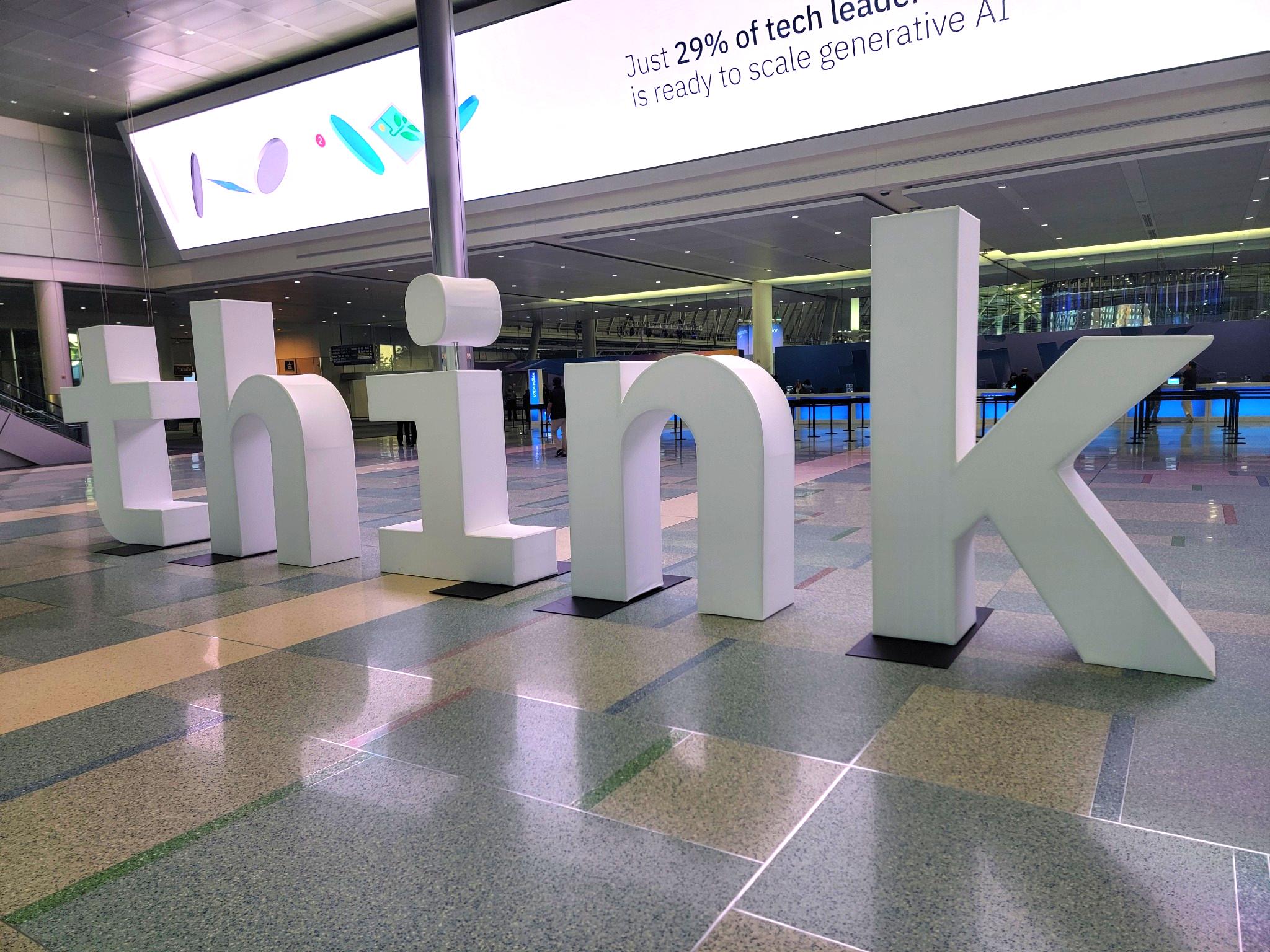
IBM Corp. will use its Think 2026 conference today to outline a broad expansion of its enterprise artificial intelligence portfolio, positioning a new “AI operating model” as the next stage in its customers’ march toward translating early investments into measurable returns.
The announcements span agent orchestration, real-time data integration, hybrid cloud operations and digital sovereignty, reflecting what executives described as a shift away from isolated AI deployments toward systemic integration across the enterprise.
“The enterprises pulling ahead are not deploying more AI; they’re redesigning how their business operates,” IBM Chief Executive Arvind Krishna said during a media briefing.
IBM is framing AI as an operational transformation challenge rather than a model or tooling race, emphasizing its independence from AI models. The company is promoting a four-part architecture built around agents, data, automation and hybrid infrastructure, which it argues must work together to deliver value at scale.
Krishna emphasized that most enterprise data remains internal, favoring IBM’s focus on hybrid cloud. “Over 70% of all data is still sitting inside the enterprise in systems that are core and germane to them,” he said. AI strategies must therefore account for where data resides.
A central piece of today’s announcements is the evolution of watsonx Orchestrate — a platform for building, deploying and managing agents — into a multi-agent control plane spanning heterogeneous environments.
IBM characterizes its orchestration layer as a unifying framework that integrates agents from multiple vendors, said Rob Thomas, senior vice president of software and chief commercial officer. “It’s about the best agentic technology from any company in the world,” he said.
The strategy positions IBM as an integrator rather than a builder of foundation models. While the company its own foundation models called Granite, it emphasizes partnerships with model providers such as Anthropic PBC and OpenAI LLC, as well as major cloud platforms.
“We help put AI into the enterprise,” Krishna said, describing IBM’s role as orchestrating models, data and infrastructure while ensuring governance and security.
That approach reflects a broader shift in the competitive landscape. Rather than competing directly with hyperscalers on infrastructure or foundation models, IBM is focusing on what it sees as the next layer of value: operational integration.
IBM also introduced new capabilities in its “Project Bob” platform, an AI-based tool system for enterprise software development lifecycles. New features are designed to support multimodel workflows across both cloud and on-premises environments.
IBM has deployed the technology internally and driven “over $5 billion of productivity improvements,” Thomas said.
Data integration is another pillar of the strategy. Following its recent acquisition of Confluent Inc., IBM is emphasizing real-time data pipelines as a prerequisite for effective AI coordination. The integration of streaming and batch data into watsonx.data is intended to provide agents with continuously updated context.
“Your AI is only as good as your data,” Thomas said. “We’re leveraging real-time data to inform agents that run in the enterprise.”
The company is also expanding its Concert platform, which applies AI to infrastructure operations and security. Initially focused on identifying vulnerabilities, the platform now embeds security management directly into developer workflows. It identifies and prioritizes risks as code is written and can generate automatic remediations to fix or patch vulnerable code.
Execuetives stressed that human oversight is still needed. “Nothing is completely hands off, but it is used as augmentation,” Thomas said, describing how AI-generated fixes are reviewed before deployment.
Asserting that security and sovereignty are emerging as critical themes in enterprise AI, particularly in regulated industries and government environments, IBM formally announced the general availability of Sovereign Core, a platform announced early this year that supports AI deployments within tightly controlled, geographically bounded environments.
Thomas said early use cases center on organizations requiring air-gapped or fully localized infrastructure. The offering includes an extensible catalog that organizations can populate with their own applications or those from pre-vetted IBM, third-party and open-source partners.
Krishna framed sovereignty as a core requirement rather than an optional feature as AI becomes embedded in critical systems. “This way people can mix and match what’s appropriate,” he said. “That’s our strategy to go forward on AI.”
Outside the enterprise realm, IBM highlighted recent advances in quantum computing, including a collaboration with the Cleveland Clinic to simulate protein complexes containing more than 12,000 atoms. The milestone reflects growing confidence that quantum systems are moving beyond experimental phases.
The work is part of a broader push toward what IBM calls “quantum-centric supercomputing,” which combines quantum and classical systems to tackle complex problems in areas such as drug discovery. Marrying the two architectures is driving much of the current research into quantum processors.
“Quantum is no longer a science lab experiment,” Krishna said. “People are doing real use cases of significant scale.”
However, executives cautioned that large-scale commercial applications remain several years away. Krishna said meaningful enterprise impact is likely to emerge toward the end of the decade as hardware capabilities improve.
IBM executives were careful not to trumpet AI’s transformational potential, choosing instead to emphasize the hard work that still needs to be done to make models scalable and reliable.
Krishna drew a parallel to previous technology cycles, arguing that initial innovation phases tend to center on infrastructure before moving up the stack. “The real value in every one of these comes with the applications and the deployment into enterprises,” he said.
Thomas compared the current state of AI to the early days of electrification, suggesting that current AI deployments resemble incremental productivity tools rather than transformative systems.
“It’s useful, but it’s not really redefining how the company runs,” he said. “This is about moving beyond light bulbs to things that are more fundamental to how a company operates.”
Support our mission to keep content open and free by engaging with theCUBE community. Join theCUBE’s Alumni Trust Network, where technology leaders connect, share intelligence and create opportunities.
Founded by tech visionaries John Furrier and Dave Vellante, SiliconANGLE Media has built a dynamic ecosystem of industry-leading digital media brands that reach 15+ million elite tech professionals. Our new proprietary theCUBE AI Video Cloud is breaking ground in audience interaction, leveraging theCUBEai.com neural network to help technology companies make data-driven decisions and stay at the forefront of industry conversations.