 AI
AI
AI
AI



AI

Strategic AI partnerships play a central role in the deployment of Dell Technologies Inc.’s initiatives. The company’s alliances with chipmakers, virtualization leaders, cloud providers, and a host of leading software platforms have allowed it to build a platform that makes compute, storage, networking, and workloads work cohesively across hybrid and multicloud worlds.
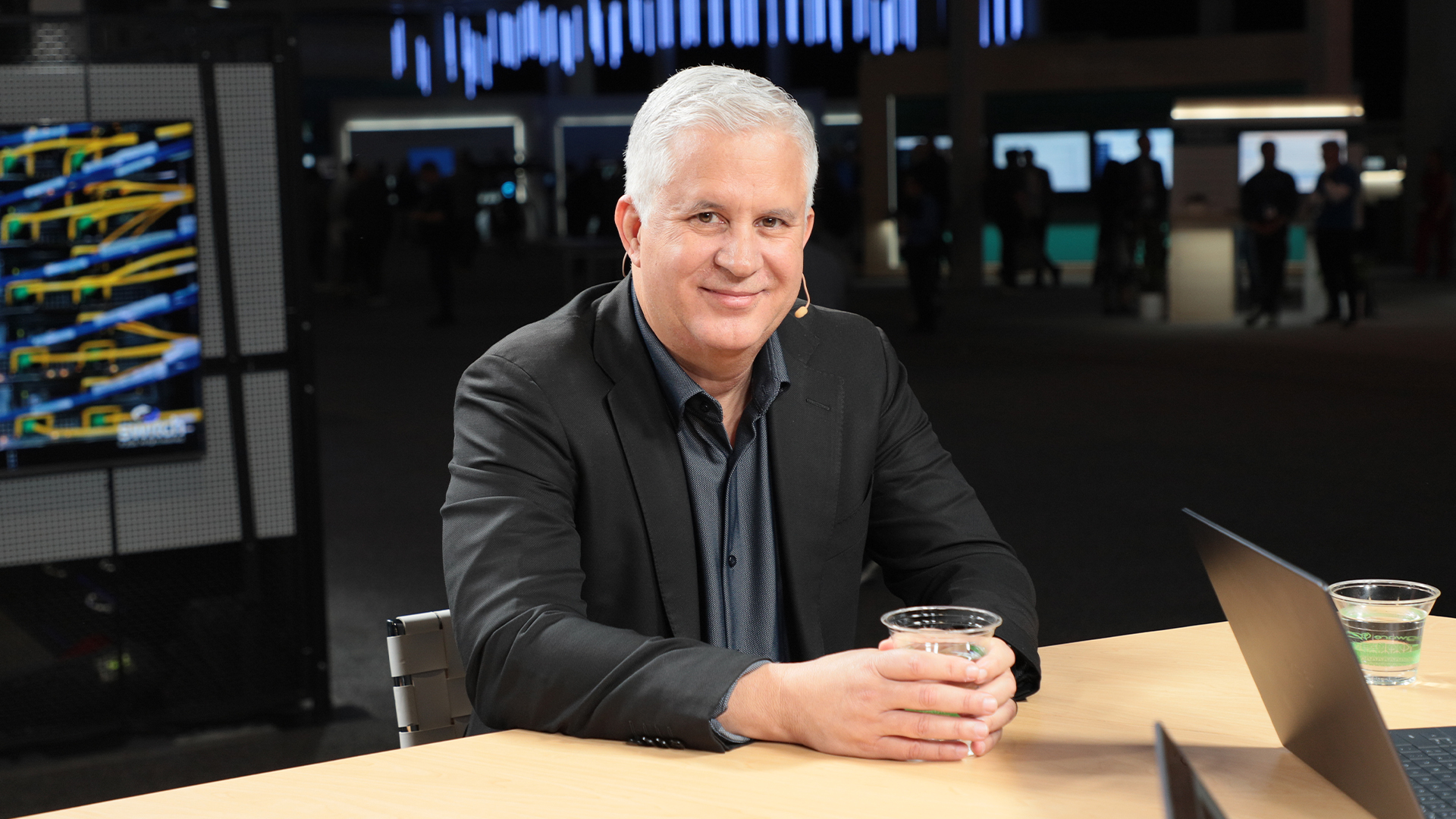
Two of Dell’s key partnerships involve Microsoft Corp. and Advanced Micro Devices Inc., with a set of integrated solutions designed to help joint customers build infrastructure platforms that can meet the needs of AI. Alliances such as these continue to be a significant source of innovation, according to Arthur Lewis (pictured), president of infrastructure solutions group at Dell.
“There’s still a very large opportunity for the partner community here,” said Lewis, during an interview with theCUBE, SiliconANGLE Media’s livestreaming studio. “And what I’m seeing is that with artificial intelligence, partners are creating tons of new offers and services that surround everything around AI. We provide all the infrastructure that the customer needs and then the partner is in there to provide other types of services, but whether they could be data services, day two services, there’s an incredible opportunity to fill out that offering.”
Reporting from Dell Technologies World in Las Vegas, theCUBE explored how Dell and its ecosystem partners, such as Microsoft and AMD, are generating new solutions to power the AI future. (* Disclosure below.)
Here’s theCUBE’s complete video interview with Arthur Lewis:
Here are three key insights you may have missed from theCUBE’s coverage of Dell Technologies World and the company’s partnerships with Microsoft and AMD:
Enterprises are rapidly discovering that AI deployment comes with a cost. The State of FinOps 2026 report noted that 98% of practitioners now manage AI spend, and most organizations still overspend on AI workloads by four to five times their original budget. This is placing more pressure on vendors to provide cost-efficient solutions, as described by Kenny Lowe, technical staff, cloud platforms evangelism and enablement lead at Dell, who was joined in an interview with theCUBE by Raghu Venkataraman, principal product manager for cloud and AI at Microsoft.
“One of the major trends that we see in the industry just now is what we’ll call memory and storage cost volatility,” Lowe discussed with theCUBE. “And that’s just going up and up and up. The cost of solutions is going up and that’s really leading to people having to be much smarter about how they architect their solutions as well.”
One of these solutions involves managing the cost of tokens, the fundamental units of data processed by large language models. To address this issue, Dell recently launched Deskside Agentic AI, an on-premises or PC-based sandbox where AI agents can be built and tested locally without driving up cloud expenses.
As described by Jon Siegal, senior vice president of Dell portfolio marketing at Dell, who appeared on theCUBE with Mary Ann Anderson, worldwide marketing director of Dell partnerships at Microsoft, free token generation can help reduce AI expense.
“What’s resonating with customers right now is that the cost of tokens is through the roof,” Siegal said. “We know even though the cost of a token has come down pretty dramatically, the amount of tokens that are being consumed right now is just astronomical. The cloud costs are just pretty high right now. How do customers balance that out and run the right workload in the right place? Well, we’re trying to give customers a place to start. The PC is a great place to start.”
Here’s theCUBE’s complete video interview with Mary Ann Anderson and Jon Siegal:
The rise of agentic AI has also been accompanied by a rise in central processing unit or CPU demand. Agents don’t always need GPUs to run efficiently, and this has generated a tailwind for chipmakers such as AMD who maintains a deep CPU portfolio.
“Agentic AI is very goal-oriented,” explained Robert Hormuth, corporate vice president of architecture and strategy for the Data Center Solutions Group at AMD, during an interview with theCUBE. “You ask it to achieve a goal, and it’s going to use every tool, every software, everything in the book to go achieve that goal. One of those might be querying a GPU to get a complex math equation, but the rest of it is planning, checking, kicking off tools, verification and iterating. There’s just a lot more going on in the world of agentic. That’s one of the big kickers right now for CPU demand.”
Planning, orchestration and tool-calling in multi-step agent workflows are serial tasks that can be accomplished within CPU architecture over massively parallel GPU compute. This favors a serial architecture over a parallel one, according to Suresh Andani, corporate vice president for compute and enterprise AI at AMD.
“In the agentic flow, where you’re running multi-system agents, the first step you do when an agent request comes in [is] you need to start planning … that’s a combination of CPU and GPU,” Andani told theCUBE. “Then you’ve got to go execute that plan, which involves a lot of orchestration, which is a serial job — it’s not a parallel job that GPUs do well. All of that tool execution is optimized on a serial architecture like a CPU versus a massively parallel architecture like a GPU. If you don’t do that, your very expensive GPUs are sitting idle, and that is a waste of money.”
Here’s theCUBE’s complete video interview with Suresh Andani and Melissa Crichton, vice president of server and AI solutions at Dell :
A key element in the Dell/Microsoft partnership involves the integration of database, automation and hybrid cloud capabilities into a stack that can feed AI the data it needs. The latest announcements surrounding the Dell Automation Platform and the role of Microsoft Azure with SQL Server illustrate how the two companies are designing architecture for the full AI deployment life cycle.
“The key architecture for AI capabilities is integrating with things like embedding models for vector searching or chat completion models for AI agents. But we do it all inside the engine — the SQL Server Engine,” according to Bob Ward, principal architect at Microsoft, in a conversation with theCUBE. “We [formed a] partnership with Dell so that we can connect to anything on premises. I can connect to Azure Local, Dell, Nvidia Factory. We just got a framework built-in. It doesn’t matter where you’re running these AI models, we can easily integrate with it.”
Dell’s Automation Platform facilitates this framework by enabling customers to deploy Microsoft Azure Local on-premises. This allows enterprises to manage the full AI lifecycle, from hardware to workload, in a single, coherent system, as described by Robert Sonders, technical staff global engineering technologist for platform automation and multicloud software at Dell, in his appearance on theCUBE.
“We start at the tin — we start in the box — maintaining hardware, firmware updates, rolling that through,” he said. “Once we get to a point, we connect to the cloud control plane, Azure bits come down [and] SQL Server can be loaded through Azure. We could do it even with a custom blueprint if it’s a specific need, however we want to do that, however customers want to do that. That’s the full life cycle for that type of deployment.”
Here’s theCUBE’s complete video interview with Robert Sonders and Bob Ward:
To watch more of theCUBE’s coverage of Dell Technologies World, here’s our complete video playlist:
Read more takeaways from the event here.
(* Disclosure: TheCUBE is a paid media partner for Dell Technologies World 2026. Sponsors of theCUBE’s event coverage do not have editorial control over content on theCUBE or SiliconANGLE.)
Support our mission to keep content open and free by engaging with theCUBE community. Join theCUBE’s Alumni Trust Network, where technology leaders connect, share intelligence and create opportunities.
Founded by tech visionaries John Furrier and Dave Vellante, SiliconANGLE Media has built a dynamic ecosystem of industry-leading digital media brands that reach 15+ million elite tech professionals. Our new proprietary theCUBE AI Video Cloud is breaking ground in audience interaction, leveraging theCUBEai.com neural network to help technology companies make data-driven decisions and stay at the forefront of industry conversations.