 THOUGHT LEADERSHIP
THOUGHT LEADERSHIP
THOUGHT LEADERSHIP



THOUGHT LEADERSHIP

Can anyone briefly, accurately define digital transformation for the enterprise? It broadly has to do with modernizing and becoming more data-driven and end-user focused. But there are many technology service vendors and experts wielding different road maps to DX. Is there anywhere to turn for real-life examples from companies walking the talk?
Dell Technologies Inc. is holding itself forth as the tech company digitally-transforming customers can look up to. As a legacy company older than some startup founders in Silicon Valley, Dell understands established enterprises. Companies saddled with existing hardware and applications need practical, doable methods to modernize their information technology and businesses.
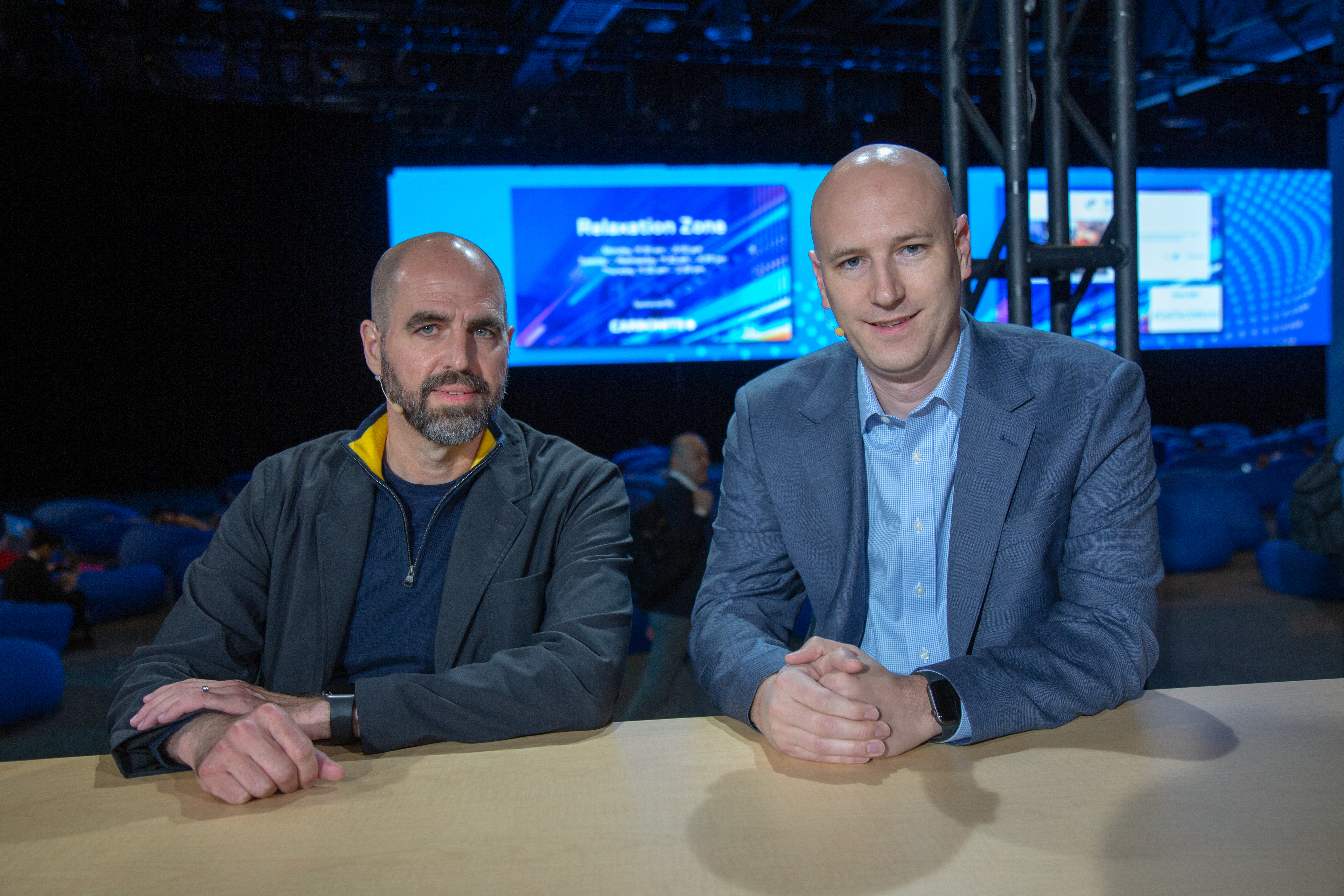
“If you guys ever Google ‘digital transformation,’ good luck,” said Greg Bowen (pictured, left), senior vice president and chief technology officer, Dell Digital. “The first six or seven results are all paid. Someone’s trying to sell you the story on digital transformation.”
Dell, on the other hand, is out there actually doing it, Bowen added, by transforming IT, workforce, security and applications. “We had to develop a way that will allow us to accelerate our path through that, and we call it the Dell Digital Way,” he said.
Dell is going to market with the lessons it has gleaned, incorporating them into products and business decisions.
Bowen and Garry Wiseman (pictured, right), senior vice president of digital commerce experiences at Dell, spoke with Dave Vellante (@dvellante) and John Furrier (@furrier), co-hosts of theCUBE, SiliconANGLE Media’s mobile livestreaming studio, during the Dell Tech World event in Las Vegas. They discussed what Dell’s learned on its path to transformation (see the full interview with transcript here). (* Disclosure below.)
Transformation involves people, process and technology and requires change to the underlying culture, Bowen pointed out. IT ought to be seen as an agile enabler of desired business outcomes. “Start with the business and the user first, and then work backwards from that,” he added.
Take large programs that generate risk and break then into small, low-risk deliverables, Bowen advised. For example, break functional silos into small teams that write their own code; and teach team members new skills needed for agile, digital business.
“We’re taking program managers and putting them through full-stack developer training,” Bowen stated.
Having business and product teams work together results in improved product design that meets market needs, Wiseman said. “The fact that we have that close relationship with the product team, we can actually ask for new features that they will actually then go ahead and develop for us in order to support our business,” he concluded.
Watch the complete video interview below, and be sure to check out more of SiliconANGLE’s and theCUBE’s coverage of the Dell Tech World 2019 event. (* Disclosure: Dell Technologies Inc. sponsored this segment of theCUBE. Neither Dell nor other sponsors have editorial control over content on theCUBE or SiliconANGLE.)
Support our mission to keep content open and free by engaging with theCUBE community. Join theCUBE’s Alumni Trust Network, where technology leaders connect, share intelligence and create opportunities.
Founded by tech visionaries John Furrier and Dave Vellante, SiliconANGLE Media has built a dynamic ecosystem of industry-leading digital media brands that reach 15+ million elite tech professionals. Our new proprietary theCUBE AI Video Cloud is breaking ground in audience interaction, leveraging theCUBEai.com neural network to help technology companies make data-driven decisions and stay at the forefront of industry conversations.