 AI
AI
AI
AI





AI

Most enterprise AI pilots are failing to deliver measurable AI business value, and Appian Corp. is suggesting that the culprit isn’t the technology.
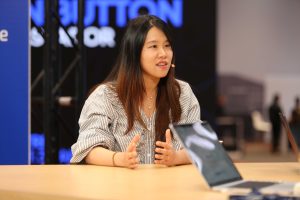
The gap between AI experimentation and real enterprise transformation is widening as organizations mistake personal productivity gains for structural change. Embedding AI inside deterministic workflows — not deploying it as a standalone tool — is the precondition for compliance, auditability and real return on investment, according to Greta Peterman (pictured), principal business value engineer at Appian.
“AI in and of itself is just AI. It’s like an engine without a car,” Peterman said. “You really have to put AI within a workflow process in order to have it work deterministically and effectively. Otherwise, it’s just an opportunity without a targeted outcome.”
Peterman spoke with theCUBE’s Alison Kosik at Appian World 2026, during an exclusive broadcast on theCUBE, SiliconANGLE Media’s livestreaming studio. They discussed achieving measurable AI business value, the difference between probabilistic and deterministic AI and how organizations can move from pilots to board-level outcomes. (* Disclosure below.)
The difference between AI that impresses in a demo and AI that satisfies a regulator or a chief financial officer comes down to determinism. Enterprise processes such as invoice reconciliation or sales order management cannot tolerate probabilistic outputs — they require absolute, auditable results, Peterman explained.
“[OpenAI] had a paper. What I really loved about it is that it’s like when you’re a kid going and doing a test,” she said. “The people that actually know the work, they know that A plus B equals C and it’s deterministic. When you’re talking about an invoice reconciliation process, you do not want it to be probabilistic. You need to have it absolute.”
A study by International Data Corp., commissioned by Appian, found a 441% three-year return on investment and 59% faster time to market for organizations using the platform, Peterman noted. The companies achieving that level of return share a common trait: They measure the downstream impact of process changes, not just time saved. Working with a global medical technology provider, Peterman’s team quantified that a single AI-assisted sales order workflow was catching downstream defects worth millions of dollars. What might appear to be an edge case process can drive 80% of downstream impact — making it invisible to teams focused only on throughput.
“20% of something that seems like an exception process has that downstream process 80% impact,” she said. “If you’re just looking at doing cool things, you’re not really addressing the friction points between you and your customer or your competitors.”
Here’s the complete video interview, part of SiliconANGLE’s and theCUBE’s coverage of Appian World 2026:
(* Disclosure: TheCUBE is a paid media partner for Appian World. Neither Appian, the sponsor of theCUBE’s event coverage, nor other sponsors have editorial control over content on theCUBE or SiliconANGLE.)
Support our mission to keep content open and free by engaging with theCUBE community. Join theCUBE’s Alumni Trust Network, where technology leaders connect, share intelligence and create opportunities.
Founded by tech visionaries John Furrier and Dave Vellante, SiliconANGLE Media has built a dynamic ecosystem of industry-leading digital media brands that reach 15+ million elite tech professionals. Our new proprietary theCUBE AI Video Cloud is breaking ground in audience interaction, leveraging theCUBEai.com neural network to help technology companies make data-driven decisions and stay at the forefront of industry conversations.