 AI
AI
AI
AI







AI

The AI-native enterprise isn’t an ideal anymore. Instead, it has become the new competitive baseline.
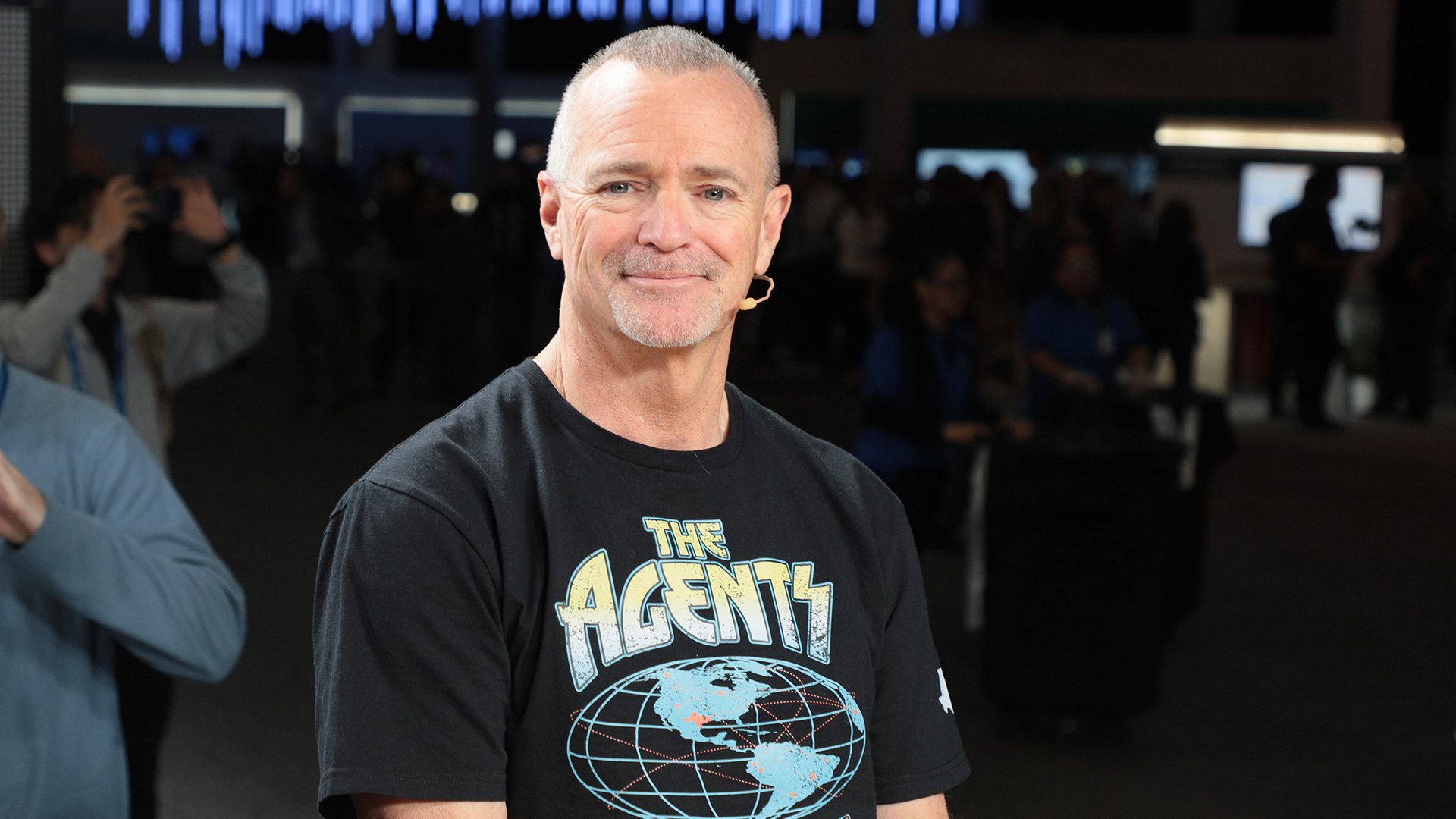
Dell Technologies Inc. has spent nearly three years interrogating that reality from the inside, using its own operations as a live proving ground, according to Jeff Clarke (pictured), vice chairman and chief operating officer of Dell. That time spent on internal iteration has also made the current moment easy to recognize, with frontier model advances of the past year having created a genuine inflection point in the AI-native enterprise journey.
“We spent the last two years asking the AI to answer a question, asking the AI to go do a little research and then we advance and we ask it to do a little thinking, some reasoning,” Clarke said. “Now it’s doing work, and meaningful work — work that for the last 20 years we told software developers, ‘You have nothing to worry about. Your craft is safe.’ Here we are [and] in six months, the entire landscape of software development has changed.”
Clarke spoke with theCUBE’s John Furrier and Dave Vellante at Dell Technologies World 2026, during an exclusive broadcast on theCUBE, SiliconANGLE Media’s livestreaming studio. They discussed how Dell is applying the AI-native enterprise operating model, the economics of token routing and what it means to build a super-user workforce. (* Disclosure below.)
The productivity ceiling for enterprise AI becomes visible the moment companies try to layer agents over unchanged processes. For example, a group of 50 engineers at Dell spent a year building software that now ships on Alienware notebooks, Clarke explained. Two AI engineers, given a day and as many tokens as they could use, replicated 30% of that functionality in roughly a week — limited only by the lack of original architectural context. Once that context was fed to the model, the full build was expected to reach production in fewer than four weeks. That example is as much a demonstration of what’s possible as it is a diagnosis of why most companies will fall short.
“The error some companies will make is they’re gonna take agents and try to put it on their existing process and it’ll make them better, and you’re gonna get incremental productivity gains — 20, 30, 40%,” he said. “But if you want the productivity gains [of] 10X, 100X, you have to rebuild the workflow. You have to take it, decompose it — what can go away? What can the human be extracted from and what can the agent do?”
That rebuild demands a foundation that most enterprises haven’t finished laying. Dell’s own path — simplify, standardize and automate, connect data sources, build an agentic framework and then expand broadly — took three years to yield the scale now visible across the business, Clarke noted. Pair that with the realities of token economics, where enterprise information technology spending could migrate from headcount to tokens. The commitments required for this new operational model are steep — and no longer optional.
“Everybody has to become an AI-native company — not in the context of ‘I was born in the AI era.’ You need to be able to implement that operating model,” he said. “You need to be able to take that utility of intelligence and apply it everywhere. Those who figure that out are advantaged and will win in their respective marketplaces.”
Here’s the complete video interview, part of SiliconANGLE’s and theCUBE’s coverage of Dell Technologies World 2026:
(* Disclosure: TheCUBE is a paid media partner for Dell Technologies World 2026. Sponsors of theCUBE’s event coverage do not have editorial control over content on theCUBE or SiliconANGLE.)
Support our mission to keep content open and free by engaging with theCUBE community. Join theCUBE’s Alumni Trust Network, where technology leaders connect, share intelligence and create opportunities.
Founded by tech visionaries John Furrier and Dave Vellante, SiliconANGLE Media has built a dynamic ecosystem of industry-leading digital media brands that reach 15+ million elite tech professionals. Our new proprietary theCUBE AI Video Cloud is breaking ground in audience interaction, leveraging theCUBEai.com neural network to help technology companies make data-driven decisions and stay at the forefront of industry conversations.