 EMERGING TECH
EMERGING TECH
EMERGING TECH



EMERGING TECH

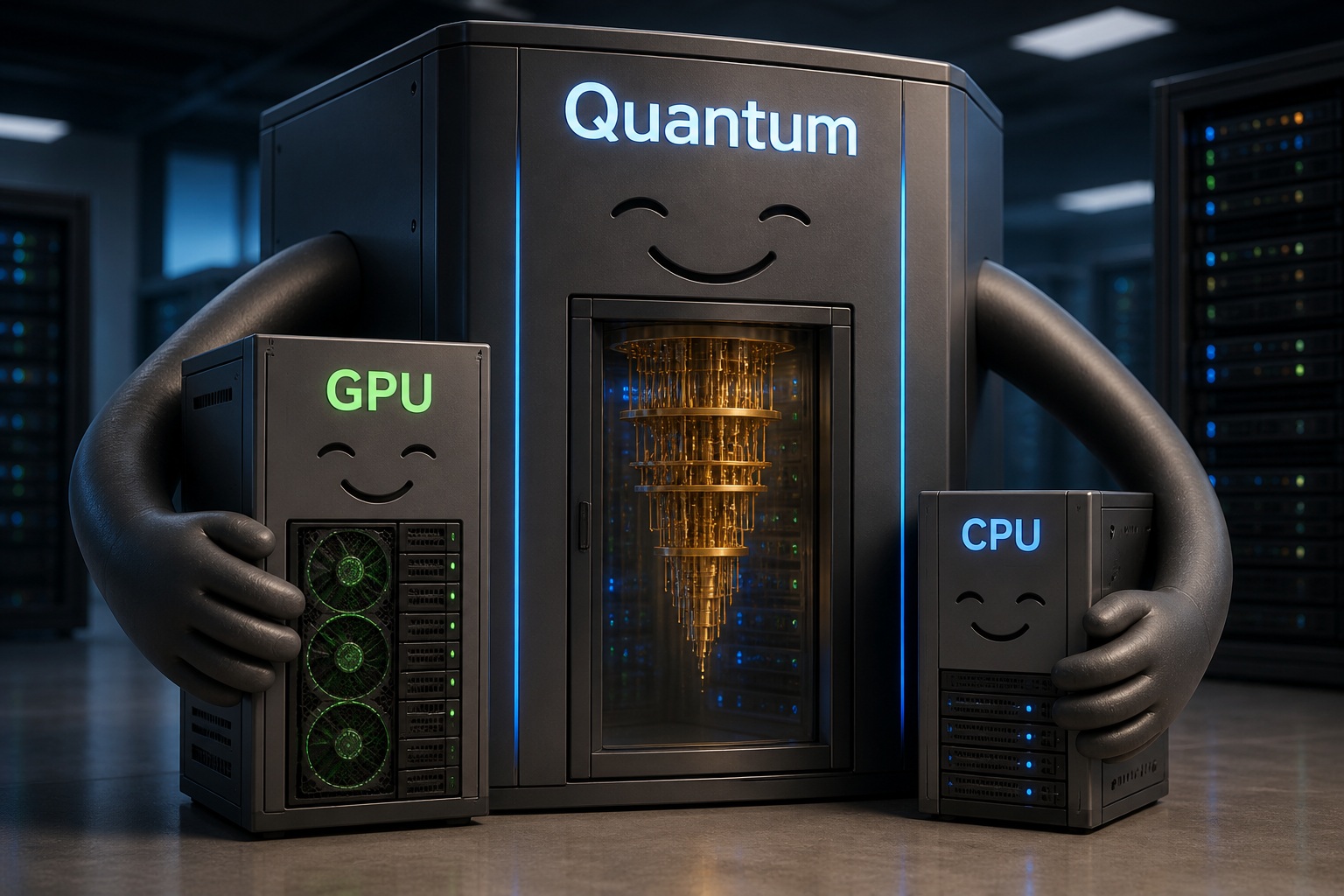
The way to look at quantum computing is not as a replacement for traditional computing architectures, but rather as a complement to them. There is the central processing unit, the graphics processing unit and, soon, quantum. Industry experts believe that all three will drive innovation for years to come.
What is not clear yet is what role quantum computing will play in this computing triumvirate. Some very large technical issues have held quantum back and there is a lack of reliable, high-level tools for programming quantum computers. Despite these challenges, surging investment and rapid innovation could propel the quantum market to exceed $100 billion over the next decade. A core engineering challenge and ultimate breakthrough will be the linkage of quantum devices to exascale computers. This has been the focus of the U.S. Department of Energy’s Oak Ridge National Laboratory.
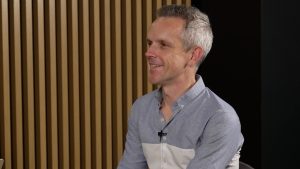
“Quantum is a rapidly-growing capability,” said Tom Beck, section head for science engagement and acting group leader for quantum-HPC at Oak Ridge National Laboratory, in an interview with theCUBE during HPE World Quantum Day 2026. “We see that as the next frontier in high-performance computing, but it’s likely to be, at least initially, a more specialized accelerator of certain computational workloads. It’s really a game of transfer of information. How do you accelerate the flow of information between the two machines and do the hardest thing on the quantum device?”
This feature is part of SiliconANGLE Media’s exploration of the architectural shifts powering the enterprise computing world. Be sure to check out SiliconANGLE’s extensive coverage of the latest trends in quantum computing as part of HPE World Quantum Day 2026. (* Disclosure below.)
Unlike classical computing, quantum uses quantum bits, called qubits, as the basic units of information, which can exist as both 0 and 1 at the same time. This provides quantum with the ability to perform certain actions exponentially faster, with the power to process massive datasets and variables in parallel rather than sequentially, as in classical computing.
The promise of quantum has spawned a number of significant research projects over the years, geared toward creating new frameworks for faster problem solving, advanced simulation, optimization, and even enhanced learning for artificial intelligence. Yet these projects are unlikely to progress out of the lab unless there is a convergence of quantum, high-performance computing and AI.
Hewlett Packard Enterprise Co. is working with ORNL to support this approach. In partnership with Nvidia Corp., HPE and ORNL are focused on using tools, such as NVQLink and CUDA-Q programming solutions, to integrate classical computing clusters with quantum processors to perform key tasks such as quantum error correction and the generation of hybrid quantum-classical algorithms.
Error correction continues to be a factor in holding back quantum acceleration. Quantum devices and qubits have more errors than classical machines and some researchers believe that AI itself may hold the key through its potential to design more efficient quantum circuits that can accelerate error correction. Researchers are also employing AI to discover new quantum algorithms and improve the efficiency of hybrid workflows that combine multiple computing paradigms.
At the Leibniz Supercomputing Centre in Munich, researchers have successfully integrated a 20-qubit quantum computer into a supercomputer, the SuperMUC-NG. Supercomputers are here to stay, according to Dieter Kranzlmüller, chairman of the board at the Leibniz Supercomputing Centre and professor of computer science at the Ludwig Maximilian University of Munich, and quantum will emerge as a resource for specific applications.
“This means, in essence, that we are sending jobs to the supercomputer and the system decides whether it’s done on the supercomputer or whether it’s kind of given to the quantum computer,” said Kranzlmüller, in an interview with theCUBE. “I think that’s the important thing about why we do integration and why we believe we should combine both of these things together.”
Outcomes from the work at ORNL and Leibniz highlight an important part of the quantum story. Researchers at major research labs, in partnership with key players such as HPE and Nvidia in the enterprise world, are at the forefront of quantum innovation. The work of these labs is focused on a number of critical areas for quantum’s advancement. At Argonne National Laboratory, work is progressing on building heterogeneous systems that will leverage CPUs, GPUs, AI and quantum accelerators in one package.
Argonne and its partners, which include HPE, Intel, Nvidia and Oracle, are developing software layers to abstract away hardware complexity. The goal is to allow users to incorporate quantum computing into existing workflows without needing an understanding of the arcane technology that is part of the quantum ecosystem.
“We don’t want them to have to understand what a Hamiltonian operator or an Ansatz is,” said Laura Schulz, project lead for quantum innovation at Argonne, in conversation with theCUBE.
At the Pawsey Supercomputing Research Centre in Perth, Australia, researchers are focused on using quantum machines as specialized tools to solve specific problems. With the support of HPE’s Cray division, Pawsey has developed the Setonix supercomputer, the most powerful research computer in the Southern Hemisphere.
The Setonix-Q initiative extends high-performance computing resources to Australian researchers for identifying sections of complex problems that can benefit the most from quantum acceleration. Scientists can develop and test quantum algorithms in a classical computing environment before moving workloads onto more complex quantum hardware.
“Quantum computers are a great way to tackle a certain set of problems, like optimization problems,” said Pascal Elahi, quantum supercomputing research lead at Pawsey, during his interview with theCUBE. “We want to expand access not just to quantum computing researchers, but to people who want to solve a problem.”
This openness and access in the quantum research field is one reason why there is no single generally accepted architecture for quantum computers today. Approaches now include ion-based and atom-based systems, as well as superconducting methods.
Researchers in the field are not concerned with this reliance on varied systems. “There’s a lot every one of these hardware platforms can learn from each other,” according to Kristi Beck, director of the Livermore Center for Quantum Science at Lawrence Livermore National Laboratory, in discussion with theCUBE.
In addition to its partnerships with various research labs to advance quantum use and development, HPE has been leveraging its industry alliances to make quantum computing scalable across industries. In November, the company announced the formation of the Quantum Scaling Alliance, a collaboration whose founding members include Applied Materials, Synopsys, Quantum Machines and the University of Wisconsin.
Along with Dr. Masoud Mohseni from HPE Labs, the Alliance is co-led by John Martinis, a 2025 Nobel Laureate recognized for pioneering advances in quantum computing.
“Quantum computers hold the key to transforming industries through their unique ability to tackle intrinsically quantum problems,” said Martinis. “By harnessing quantum systems, we can achieve breakthroughs in areas ranging from semiconductor manufacturing to sustainable fertilizer production—solving challenges previously thought insurmountable.”
HPE has also been actively participating in preparations for what is known in the tech world as “Q-Day,” the moment when fully scalable quantum computers become capable of breaking current encryption standards. That time is still considered to be at least four to six years into the future, but the tech industry is already taking steps to safeguard systems.
For HPE, these include integrating quantum-resistant algorithms into ProLiant hardware and aligning with emerging standards to protect data and infrastructure. The company has also embedded post-quantum cryptography into silicon root of trust and edge-to-cloud frameworks.
HPE’s involvement in the quantum field, along with participation by a number of other key tech industry players, has helped generate greater interest in the technology’s potential. And the U.S. is not the only nation seeking to capitalize on quantum’s future.
In Europe, the Lumi-Q consortium has brought together 13 partners from eight European countries for researchers to generate results when classical supercomputers are combined with emerging quantum systems. The group is pursuing a number of potential applications including catalysts, batteries and magnets within the field of materials science, and modeling molecular interaction to aid drug discovery.
“We want to give European users the opportunity to start testing and experimenting with quantum computing and really figure out what use they will have in the future,” said Mikael Johansson, manager of quantum technologies at CSC – IT Center for Science Ltd. in Espoo, Finland, during an appearance on theCUBE.
China and the U.S. hold the distinction of having filed the most patent applications for quantum technologies, and the White House is reportedly preparing an executive order that would establish a federal government strategy that would support investment, infrastructure, security, and commercialization efforts across the U.S. for quantum computing.
It’s a progression of activity and events reminiscent of the many years when AI was considered a niche technology not ready for prime time. The industry still has a number of different problems that need to be resolved, but there is a clear feeling among leading researchers that quantum will soon arrive.
“I’ve watched the development of the vendor industry and how they’re developing new chip or qubit technologies,” said ORNL’s Beck. “And error correction is making progress. I really do feel that it is moving in a positive direction and within a few years we will be in a very different place.”
(* Disclosure: TheCUBE is a paid media partner for the HPE World Quantum Day event. Neither HPE, the sponsor of theCUBE’s event coverage, nor other sponsors have editorial control over content on theCUBE or SiliconANGLE.)
Support our mission to keep content open and free by engaging with theCUBE community. Join theCUBE’s Alumni Trust Network, where technology leaders connect, share intelligence and create opportunities.
Founded by tech visionaries John Furrier and Dave Vellante, SiliconANGLE Media has built a dynamic ecosystem of industry-leading digital media brands that reach 15+ million elite tech professionals. Our new proprietary theCUBE AI Video Cloud is breaking ground in audience interaction, leveraging theCUBEai.com neural network to help technology companies make data-driven decisions and stay at the forefront of industry conversations.